Summary

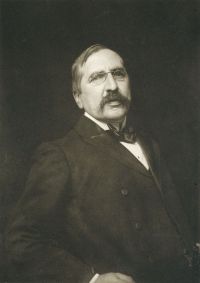
Portrait of Gleeson White Gleeson White Children's Books and Their Illustrators

The illustrator when he is at work often thinks more of the art critic who may review his book than the readers who are to enjoy it. Purely conventional groups of figures, whether set in a landscape, or against a decorative background, as a rule fail to retain a child's interest. He wants invention and detail, plenty of incident, melodrama rather than suppressed emotion. Something moving, active, and suggestive pleases him most, something about which a story can be woven not so complex that his sense is puzzled to explain why things are as the artist drew them.
Source: Gutenberg

Portrait of Gleeson White Gleeson White Children's Books and Their Illustrators

Possibly, in pleading for imaginative art, one has forgotten that everywhere is Wonderland to a child, who would be no more astonished to find a real elephant dropping in to tea, or a real miniature railway across the lawn, than in finding a toy elephant or a toy engine awaiting him. Children are so accustomed to novelty that they do not realise the abnormal; [63] nor do they always crave for unreality. As coaches and horses were the delight of youngsters a century ago, so are trains and steamboats to-day.
Source: Gutenberg

Portrait of Gleeson White Gleeson White Children's Books and Their Illustrators

Walter Crane, Miss Kate Greenaway, Miss Dorothy Tennant, have each tried to surpass the other in appealing to the New Hero's love of real business in art—treating him, indeed, as though he were Hoteï, the Japanese god of enjoyment—giving him as much colour, as much dramatic action, and as little perspective as is possible to man's finite capacity in this line. Some generous art critics have even gone so far indeed as to credit an entire artistic movement, that of pre-Raphaelism, with a benevolent desire to accommodate art to the New Hero's peculiar ideas upon perspective.
Source: Gutenberg

Get perspective with Kwize: daily news enlightened by great literature