Edwin Ray Lankester

Edwin Ray Lankester

Summary

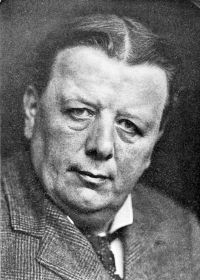
Portrait of Edwin Ray Lankester Edwin Ray Lankester,  1911 Encyclopedia Britannica (1911)

“ The Arthropoda are all distinguished from the Chaetopoda by the fact that the head consists of one or more somites which lie in front of the mouth (now called prosthomeres) , as well as of one or more somites behind it (opisthomeres) . The first of the post-oral somites invariably has its parapodia modified so as to form a pair of hemignaths (mandibles) . About 1870 the question arose for discussion whether the somites in front of the mouth are to be considered as derived from the prostomium of a Chaetopod-like ancestor. ”
Source: Wikisource

Portrait of Edwin Ray Lankester Edwin Ray Lankester,  1911 Encyclopedia Britannica (1911)

“ At the same time the prostomium and its appendages cease to be recognizable as distinct elements of the head. The brain no longer consists solely of the nerve-ganglion-mass proper to the prostomial lobe, as in Chaetopoda, but is a composite (syncerebrum) produced by the fusion of this and the nerve-ganglion-masses proper to the prosthomeres or segments which pass forwards, whilst their parapodia (= appendages) become converted into eye-stalks, and antennae, or more rarely grasping organs. ”
Source: Wikisource

Portrait of Edwin Ray Lankester Edwin Ray Lankester,  1911 Encyclopedia Britannica (1911)

“ The tendency to retain the original name of an old and comprehensive group for one of the fragments into which such group becomes divided by the advance of knowledge—instead of keeping the name for its logical use as a comprehensive term, including the new divisions, each duly provided with a new name—is most curiously illustrated in the history of the word physiology. ”
Source: Wikisource

Get perspective with Kwize: daily news enlightened by great literature