Summary

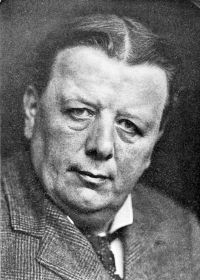
Portrait of Edwin Ray Lankester Edwin Ray Lankester 1911 Encyclopædia Britannica, Volume 2… (1911)

There is no doubt, from a consideration of the facts of structure, that the aquatic water-breathing Arachnids, represented in the past by the Eurypterines and to-day by the sole survivor Limulus, have preceded the terrestrial air-breathing forms of that group. Hence we see at once that the better-known Arachnida form a series, leading from Limulus-like aquatic creatures through scorpions, spiders and harvest-men, to the degenerate Acari or mites.
Source: Wikisource

Portrait of Edwin Ray Lankester Edwin Ray Lankester 1911 Encyclopædia Britannica, Volume 2… (1911)

A somite placed between the prosoma and mesosoma—the prae-genital somite—appears to have belonged originally to the prosomatic series (which with its ocular prosthomere and palpiform limbs [Pantopoda] , would thus consist of eight somites) , but to have been gradually reduced. In living Arachnids, excepting the Pantopoda, it is either fused (with loss of its appendages) with the prosoma (Limulus, [7] Scorpio) , after embryonic appearance, or is retained as a rudimentary, separate, detached somite in front of the mesosoma, or disappears altogether (excalation) .
Source: Wikisource

Portrait of Edwin Ray Lankester Edwin Ray Lankester 1911 Encyclopædia Britannica, Volume 2… (1911)

The maceration of the soft parts of a scorpion preserved in weak spirit and the cleaning of the chitinized in-grown cuticle give rise to the false appearance of a limb axis carrying the lamellae. The margins of the lamellae of the scorpion’s lung-book, which are lowermost in the figures (fig. 15) and appear to be free, are really those which are attached to the blood-holding axis. The true free ends are those nearest the stigma.
Passing on now from the mesosoma we come in Scorpio to the metasoma of six segments, the first of which is broad whilst the rest are cylindrical.
Source: Wikisource

Get perspective with Kwize: daily news enlightened by great literature