Arachnida

Definition and stakes

Sir A. E. Shipley,  The Cambridge natural history, Vol… (1909)

“ ARACHNIDA—INTRODUCTION The Arachnida, together with the Crustacea, Insecta, Myriapoda, and Peripatus, make up the great phylum Arthropoda, a phylum which, from the point of view of numbers of species and of individuals, is the dominant one on this planet, and from the point of view of intelligence and power of co-operating in the formation of social communities is surpassed but by the Vertebrata. The Arachnida form a more diverse class than the Insecta ”
Source: Gutenberg

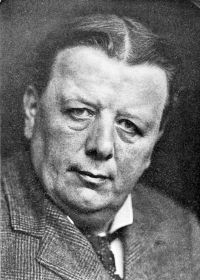
Portrait of Edwin Ray Lankester Edwin Ray Lankester,  1911 Encyclopædia Britannica, Volume 2… (1911)

“ There is no doubt, from a consideration of the facts of structure, that the aquatic water-breathing Arachnids, represented in the past by the Eurypterines and to-day by the sole survivor Limulus, have preceded the terrestrial air-breathing forms of that group. Hence we see at once that the better-known Arachnida form a series, leading from Limulus-like aquatic creatures through scorpions, spiders and harvest-men, to the degenerate Acari or mites. ”
Source: Wikisource

Portrait of Edwin Ray Lankester Edwin Ray Lankester,  1911 Encyclopædia Britannica, Volume 2… (1911)

“ When it is admitted—as seems to be reasonable—that the primitive Arachnida would, like the primitive Crustacea, be anomomeristic and anomotagmic, we shall not demand of claimants for the rank of primitive Arachnids agreement with Limulus and Scorpio in respect of the exact number of their somites and the exact grouping of those somites; and when we see how diverse are the modifications of the branches of the appendages both in Arachnida and in other classes of Arthropoda (q.v.) ”
Source: Wikisource

Get perspective with Kwize: daily news enlightened by great literature