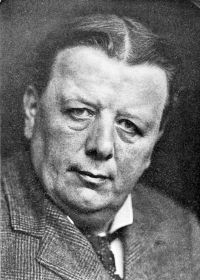
Edwin Ray Lankester

Edwin Ray Lankester

Summary

Portrait of Edwin Ray Lankester Edwin Ray Lankester 1911 Encyclopædia Britannica (1911)

Necessarily, according to the theory of natural selection, structures either are present because they are selected as useful or because they are still inherited from ancestors to whom they were useful, though no longer useful to the existing representatives of those ancestors. Structures previously inexplicable were now explained as survivals from a past age, no longer useful though once of value. Every variety of form and colour was urgently and absolutely called upon to produce its title to existence either as an active useful agent or as a survival.
Source: Wikisource

Portrait of Edwin Ray Lankester Edwin Ray Lankester 1911 Encyclopædia Britannica (1911)

The delay in the establishment of the doctrine of organic evolution was due, not to the ignorant and unobservant, but to the leaders of zoological and botanical science. Knowing the almost endless complexity of organic structures, realizing that man himself with all the mystery of his life and consciousness must be included in any explanation of the origin of living things, they preferred to regard living things as something apart from the rest of nature, specially cared for, specially created by a Divine Being.
Source: Wikisource

Portrait of Edwin Ray Lankester Edwin Ray Lankester 1911 Encyclopædia Britannica (1911)

Darwin’s theory had as one of its results the reformation and rehabilitation of teleology. According to that theory, every organ, every part, colour and peculiarity of an organism, must either be of benefit to that organism itself or have been so to its ancestors: [3] no peculiarity of structure or general conformation, no habit or instinct in any organism, can be supposed to exist for the benefit or amusement of another organism, not even for the delectation of man himself.
Source: Wikisource

Get perspective with Kwize: daily news enlightened by great literature