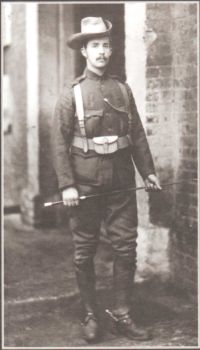
Erskine Childers

Erskine Childers

Summary

Portrait of Erskine Childers Erskine Childers The Framework of Home Rule

It is impossible to kill the idea of Home Rule, though it is possible, by retarding its realization, to pervert some of its strength and beauty, and to diminish the vital energy on which its fruition depends. And it is possible in the case of Ireland, up to and in the very hour of her emancipation, after a struggle more bitter and exhausting than any in the Empire, to heap obstacles in the path of the men who have carried her to the goal, and on whom in the first instance must fall the extraordinarily difficult and delicate task of political reconstruction.
Source: Gutenberg

Portrait of Erskine Childers Erskine Childers The Framework of Home Rule

Fitzgibbon, Lord Clare, was now supreme in the Government, and henceforth represents incarnate the forces which provoked the Rebellion and founded upon it the Union. He had bided his time for a decade, watching the trend of events, foreseeing their outcome, and smiling sardonically at the ineffectual writhings of the men of compromise. He stands out like a block of black granite over against the slender figure of Wolfe Tone, who was his anti-type in ideas and aims, his inferior in intellect, his superior in morals, but no more than his rival in sincerity, clarity, and consistency of ideas.
Source: Gutenberg

Portrait of Erskine Childers Erskine Childers The Framework of Home Rule

Will anyone be found to say that an island with a fertile soil, several nourishing industries, and a clever population of four and a half millions, is to be regarded, whatever its past history, as incapable of supporting a Government of its own out of its own resources? Let nobody be tempted by the fallacy that, given time, Ireland will regain financial stability under the fiscal Union, and at a later stage, perhaps, be more fitted to bear the burden of fiscal independence.
Source: Gutenberg

Get perspective with Kwize: daily news enlightened by great literature