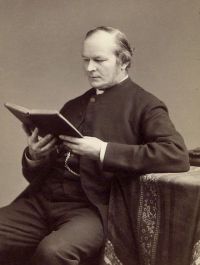
F. W. Farrar

F. W. Farrar

Summary

Portrait of F. W. Farrar F. W. Farrar Seekers after God

Shall we be jealous of the ethical loftiness of a Plato or an Aurelius? Shall we be loth to admit that some power of the Spirit of Christ, even mid the dark wanderings of Seneca's life, kept him still conscious of a nobler and a better way, or that some sweetness of a divine hope inspired the depressions of Epictetus in his slavery? Shall our eye be evil because God in His goodness granted the heathen also to know such truths as enabled them "to overcome the allurements of the visible and the terrors of the invisible world?"
Source: Gutenberg

Portrait of F. W. Farrar F. W. Farrar Seekers after God

What harm can poverty inflict on a man who despises such excesses? Look at the god-like and heroic poverty of our ancestors, and compare the simple glory of a Camillus with the lasting infamy of a luxurious Apicius! Even exile will yield a sufficiency of necessaries, but not even kingdoms are enough for superfluities. It is the soul that makes us rich or poor: and the soul follows us into exile, and finds and enjoys its own blessings even in the most barren solitudes.
"But it does not even need philosophy to enable us to despise poverty.
Source: Gutenberg

Portrait of F. W. Farrar F. W. Farrar Seekers after God

Varro thought that nature, Brutus that the consciousness of virtue, were sufficient consolations for any exile. How little have I lost in comparison with those two fairest possessions which I shall everywhere enjoy--nature and my own integrity! Whoever or whatever made the world--whether it were a deity, or disembodied reason, or a divine interfusing spirit, or destiny, or an immutable series of connected causes--the result was that nothing, except our very meanest possessions, should depend on the will of another. Man's best gifts lie beyond the power of man either to give or to take away.
Source: Gutenberg

Get perspective with Kwize: daily news enlightened by great literature