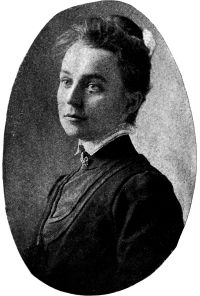
Fannie Hardy Eckstorm

Fannie Hardy Eckstorm

Summary

Portrait of Fannie Hardy Eckstorm Fannie Hardy Eckstorm The Woodpeckers

He swings like a man wielding a sledge hammer, and to the strength of his neck adds the weight of his body, the spring of his [98] tail, and the momentum of a blow delivered from a greater height. When the little hairy woodpecker does so much with his weak body, we can imagine what great birds like the logcock and the ivory-billed woodpecker, with their tremendous beaks, their huge claws, their springy tails, and their great physical strength can do. They are magnificent birds, the terror of all the grubs that hide in tree-trunks.
Source: Gutenberg

Portrait of Fannie Hardy Eckstorm Fannie Hardy Eckstorm The Woodpeckers

Most of them are Western or Southwestern birds, but one is found in nearly all parts of the United States lying between the Hudson River and the Rocky Mountains, and is the most abundant woodpecker of the middle West. This well-known cousin is the red-headed woodpecker, the tricolored beauty that sits on fence-posts and telegraph poles, and sallies out, a blaze of white, steel-blue, and scarlet, a gorgeous spectacle, whenever an insect flits by. He is the one that raps so merrily on your tin roofs when he feels musical.
Source: Gutenberg

Portrait of Fannie Hardy Eckstorm Fannie Hardy Eckstorm The Woodpeckers

When the snow lies several feet deep among the pines and spruces of the uplands, the Carpenter is not distressed for food: his pantry is always above the level of the snow; he need neither scratch a meagre living from the edges of the snow-banks, nor go fasting. His fall’s work has provided him not only with the necessities, but with the luxuries of life.
But why does he spend so much time in making holes? He might tuck his nuts into some natural crevice in the oak bark, or drop them into cavities which all birds know so well where to find.
Source: Gutenberg

Get perspective with Kwize: daily news enlightened by great literature