Summary

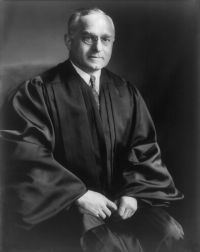
Portrait of Felix Frankfurter Felix Frankfurter National Broadcasting Company v…

As to creating a monopoly of radio in this country, let me say that this bill absolutely protects the public, so far as it can protect them, by giving the commission full power to refuse a license to anyone who it believes will not serve the public interest, convenience, or necessity. It specifically provides that any corporation guilty of monopoly shall not only not receive a license but that its license may be revoked; and if after a corporation has received its license for a period of three years it is then discovered and found to be guilty of monopoly, its license will be revoked.
Source: Wikisource

Portrait of Felix Frankfurter Felix Frankfurter National Broadcasting Company v…

The Commission's licensing function cannot be discharged, therefore, merely by finding that there are no technological objections to the granting of a license. If the criterion of 'public interest' were limited to such matters, how could the Commission choose between two applicants for the same facilities, each of whom is financially and technically qualified to operate a station? Since the very inception of federal regulation by radio, comparative considerations as to the services to be rendered have governed the application of the standard of 'public interest, convenience, or necessity'.
Source: Wikisource

Portrait of Felix Frankfurter Felix Frankfurter National Broadcasting Company v…

The Regulations, even if valid in all other respects, must fall because they abridge, say the appellants, their right of free speech. If that be so, it would follow that every person whose application for a license to operate a station is denied by the Commission is thereby denied his constitutional right of free speech. Freedom of utterance is abridged to many who wish to use the limited facilities of radio. Unlike other modes of expression, radio inherently is not available to all.
Source: Wikisource

Get perspective with Kwize: daily news enlightened by great literature