Summary

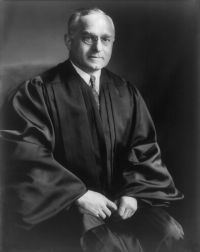
Portrait of Felix Frankfurter Felix Frankfurter National Labor Relations Board v…

According to an early English judge, 'The devil himself knoweth not the mind of man', and a modern reviewing court is not much better equipped to lay bare unexposed mental processes. It is a grave responsibility to conclude that in admitting the testimony of the Company's employees, the Board went through a mere pretense of obedience to the Court's direction, and heard the testimony with a deaf ear and a closed mind.
Source: Wikisource

Portrait of Felix Frankfurter Felix Frankfurter National Labor Relations Board v…

The Board judged of its worth, as it had a right to, in light of the mass of other testimony in the case, and found it unpersuasive. Had the Board said no more the court below could hardly have found disregard of its mandate. The Board's skeptical expression regarding this kind of testimony hardly disproves obedience to the Court's mandate. Even lower courts sometime indicate disagreement with a ruling they are bound to enforce. Out of repeated instances of hearing the same thing a generalization as to its worth will almost inevitably emerge in the thoughts of a tribunal.
Source: Wikisource

Portrait of Felix Frankfurter Felix Frankfurter National Labor Relations Board v…

By way of rebuttal to the employees' testimony that the plant union of 1937 was a spontaneous effort of the employees wholly uninfluenced by the Company, the Board admitted evidence to show that the Company fostered a company union in 1935. It does not follow that the limitation of time on admissible evidence is the same regardless of the issue for which the evidence is tendered.
Source: Wikisource

Get perspective with Kwize: daily news enlightened by great literature