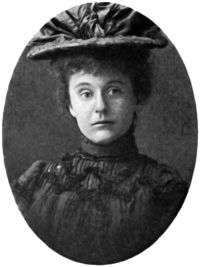
Frances Theodora Parsons

Frances Theodora Parsons

Summary

Portrait of Frances Theodora Parsons Frances Theodora Parsons Plants and their children (1896)

Every spring hundreds and thousands of baby plants make their way out of the seed shell into the world, just as you saw the baby bean plant do, sending out first its little stem, which pointed downward into the earth and started a root. And every spring there are hundreds of thousands of men and women, and boys and girls, who go through the woods and fields, and across the parks and along the streets, as though they were blind, taking no notice of the wonders all about them.
Source: Gutenberg

Portrait of Frances Theodora Parsons Frances Theodora Parsons Plants and their children (1896)

Part I—Fruits and Seeds IN THE ORCHARD Is there a nicer place in which to play than an old apple orchard? Once under those favorite trees whose branches sweep the ground, you are quite shut off from the great, troublesome, outside world. And how happy and safe you feel in that green world of your own!—a world just made for children, a world of grass and leaves and birds and flowers, where lessons and grown-up people alike have no part.
Source: Gutenberg

Portrait of Frances Theodora Parsons Frances Theodora Parsons Plants and their children (1896)

When you come across a colony of these queer-looking objects, no wonder it never occurs to you that the first flower of spring is at hand. The great shiny hoods look more like snails than like flowers; and indeed usually the flowers are not in sight at all, so well are they shielded by these hood-like leaves.
But each little hidden flower has four flower leaves, four stamens, and one pistil. When they have been dusted with pollen by fly visitors, and are preparing to turn into fruit, the purple hoods wither away. Then the plant sends up clusters of large bright green leaves.
Source: Gutenberg

Get perspective with Kwize: daily news enlightened by great literature