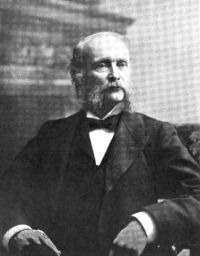
Francis Asbury Smith

Francis Asbury Smith

Summary

Portrait of Francis Asbury Smith Francis Asbury Smith The Critics Versus Shakspere

If the resemblance is generic, does it matter whether it is "close"? If "Measure for Measure" falls within the laborious definition of a "romance," or of a "tragi-comedy," as both that play and "Philaster" are called, why shouldn't we think of "Measure for Measure," produced in 1604, four years before the wildest conjecture puts the date of "Philaster," as the model upon which Beaumont and Fletcher built?
Source: Gutenberg

Portrait of Francis Asbury Smith Francis Asbury Smith The Critics Versus Shakspere

If Shakspere wrote "Cymbeline" before Beaumont and Fletcher wrote "Philaster," then Shakspere was the "creator of the heroic romances." If the question of priority is doubtful, it is just as impossible to prove the "plausibility" or "likelihood" of priority as it is to prove the date. There is no proof, therefore, no presumption, strong or weak, that "Cymbeline" was influenced by "Philaster" or was a "copy" of it. But there is proof that Beaumont and Fletcher repeatedly and habitually imitated Shakspere, and we cite it mostly from Professor Thorndike's essay.
Source: Gutenberg

Portrait of Francis Asbury Smith Francis Asbury Smith The Critics Versus Shakspere

We may admit more than this: If "Cymbeline" followed "Philaster," he was not only influenced by them, he not only imitated them, he was a plagia [117] rist; and no apologetic words that, upon the assumption stated, "Cymbeline" did not owe a very large share of its total effect to "Philaster," can make less the gravity of the charge, and if the assumption is groundless or even probably groundless, no excuse remains to the critic who makes it.
Source: Gutenberg

Get perspective with Kwize: daily news enlightened by great literature