Summary

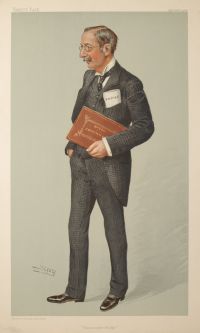
Portrait of Frederick Bridge Frederick Bridge Twelve Good Musicians: From John Bull to Henry Purcell

Captain Cooke appears to have been rarely fortunate in having in his newly-formed choral body a set of phenomenally gifted boys, and doubtless no small credit is due to the loyal and gallant musician for the skill and care he must have devoted to their training.
Captain Cooke must have been a clever teacher and a still cleverer selector of boys for his choir; and this brilliant little school he gathered round him (including such names as Humfrey, Blow, and Purcell) shines out like a beacon light in our musical world.
Source: Gutenberg

Portrait of Frederick Bridge Frederick Bridge Twelve Good Musicians: From John Bull to Henry Purcell

There is nothing so surprising to me as the universal neglect—nay, I may even use the word disdain—with which musical historians of many periods have treated the name of Richard Deering. In common with most people of my own age I knew very little about this composer, and certainly in common with, I venture to say, all my contemporaries, I never heard a note of his music until a few years ago.
Source: Gutenberg

Portrait of Frederick Bridge Frederick Bridge Twelve Good Musicians: From John Bull to Henry Purcell

I am inclined to think it is a little severe on us. I have always found that great interest is taken in the 17th century music and musicians of England.
Surely the century which began with the great Madrigal school at its highest point, which saw the Masque at its best in Milton's Comus, which witnessed the supersession of the viol by the violin, and which, at the close, had to its credit the complete works of our greatest composer, Henry Purcell, ought not to be in any sense "almost a blank," to English students at least.
Source: Gutenberg

Get perspective with Kwize: daily news enlightened by great literature