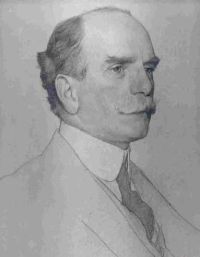
William Barclay Squire

William Barclay Squire

Summary

Portrait of William Barclay Squire William Barclay Squire Dictionary of National Biography… (1885)

To musicians who judge him from the point of view of the old ideal, his brilliancy, melody, and fertility of invention will entitle him to a place beside Berlini, Rossini, and Auber, while, on the other hand, by those who look for deeper thought and more intellectual aims in music, he will be regarded as a mere melodist, the ephemeral caterer to a generation who judged rather by manner of expression than by the value of what was expressed.
Source: Wikisource

Portrait of William Barclay Squire William Barclay Squire Dictionary of National Biography… (1885)

In estimating Balfe's position amongst the musicians of his century, it is necessary to bear constantly in mind the circumstances under which he won his renown as an operatic composer. From his Irish parentage he inherited a gift of melody which never deserted him throughout his prolific career; from England he can have gained but little, for in those days English music was practically non-existent: it was from France and Italy that he received his musical education, and it was on French and Italian boards that his first laurels were won.
Source: Wikisource

Portrait of William Barclay Squire William Barclay Squire Dictionary of National Biography… (1888)

As a child he was so delicate that he was not allowed to study, but, his health improving, he studied the violin with his father, by whom he was placed in the opera band without salary at the age of seventeen. In 1793 his name occurs as leader of the second violins at the Canterbury festival, and in the following year he was elected a member of the Royal Society of Musicians. On his father's death he succeeded to his post as leader of the Antient concerts, and it is related that George III used to give him the right tempi when Handel's compositions were performed.
Source: Wikisource

Get perspective with Kwize: daily news enlightened by great literature