Summary

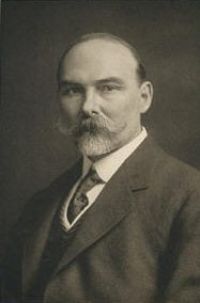
Portrait of G. R. S. Mead G. R. S. Mead Apollonius of Tyana, the Philosopher-Reformer of the First Century A.D

Apollonius was not only a philosopher, in the sense of being a theoretical speculator or of being the follower of an ordered mode of life schooled in the discipline of resignation; he was also a philosopher in the original Pythagorean meaning of the term—a knower of Nature’s secrets, who thus could speak as one having authority.
He knew the hidden things of Nature by sight and not by hearing; for him the path of philosophy was a life whereby the man himself became an instrument of knowing. Religion, for Apollonius, was not a faith only, it was a science.
Source: Gutenberg

Portrait of G. R. S. Mead G. R. S. Mead Apollonius of Tyana, the Philosopher-Reformer of the First Century A.D

Are we to think,” said Thespesion, “that the Pheidiases and Praxiteleses went up to heaven and took impressions of the forms of the Gods, and so made an art of them, or was it something else that set them a-modelling?”
“Yes, something else,” said Apollonius, “something pregnant with wisdom.”
“What was that? Surely you cannot say it was anything else but imitation?”
Imagination wrought them—a workman wiser far than imitation; for imitation only makes what it has seen, whereas imagination makes what it has never seen, conceiving it with reference to the thing it really is.”
Source: Gutenberg

Portrait of G. R. S. Mead G. R. S. Mead Apollonius of Tyana, the Philosopher-Reformer of the First Century A.D

How sadly must Jesus and Apollonius have looked upon, and still look upon, this bitter and useless strife over their saintly persons. Why should posterity set their memories one against the other? Did they oppose one another in life? Did even their biographers do so after their deaths? Why then could not the controversy have ceased with Eusebius? For Lactantius frankly admits the point brought forward by Hierocles (to exemplify which Hierocles only referred to Apollonius as one instance out of many) —that “miracles” do not prove divinity.
Source: Gutenberg

Get perspective with Kwize: daily news enlightened by great literature