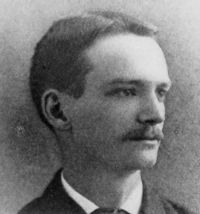
Gamaliel Bradford

Gamaliel Bradford

Darwin (1926)

Summary

Portrait of Gamaliel Bradford Gamaliel Bradford Darwin (1926)

There is the restless, ever active disposition of human nature to be doing something, almost no [Pg 98] matter what. To work, to create, to achieve, is to live. Nothing else can properly be called life. To have done great things, to be doing them, makes you feel that you exist, and why should you vex yourself with what other men think of them? Then for the scientist there is the sheer delight of adding one grain of truth to the slow accumulation of the centuries, as for the artist there is the splendid sense of having created something beautiful.
Source: Gutenberg

Portrait of Gamaliel Bradford Gamaliel Bradford Darwin (1926)

Naturally the most common matter of observation, the one which is more or less forced upon the attention of all of us, is humanity. We may be indifferent to trees and stones, but our pleasure, our labor, our existence depend upon a more or less constant study of the human beings whose existence interlocks at every point with ours. Therefore, from the earliest times of record there have been profound observers of humanity, persons who have examined the human aspect and the human heart, as read through that aspect, with the most persistent zeal and the most unwearying delight.
Source: Gutenberg

Portrait of Gamaliel Bradford Gamaliel Bradford Darwin (1926)

For patience is as necessary to the true scientist as industry. When you think you are getting new facts, discoveries that will startle the world and perhaps affect the practical living of millions, there is a natural impulse to proclaim them, there is haste, eagerness, the desire for reward, for recognition, for material success. Or, there is the fear of anticipation, that some one else may be working on the same lines, and get in before you, and all your glory will be taken away.
Source: Gutenberg

Get perspective with Kwize: daily news enlightened by great literature