Summary

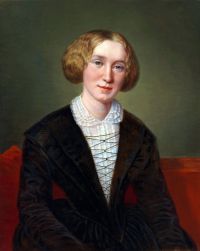
Portrait of George Eliot George Eliot Silas Marner: The Weaver of Raveloe… (1907)

Perfect love has a breath of poetry which can exalt the relations of the least-instructed human beings; and this breath of poetry had surrounded Eppie from the time when she had followed the bright gleam that beckoned her to Silas's hearth: so that it is not surprising if, in other things besides her delicate prettiness, she was not quite a common village maiden, but had a touch of refinement and fervour which came from no other teaching than that of tenderly-nurtured unvitiated feeling. She was too childish and simple to rove into questions about her unknown father
Source: Wikisource

Portrait of George Eliot George Eliot Silas Marner: The Weaver of Raveloe… (1907)

Silas sat down and watched Eppie with a satisfied gaze as she spread the clean cloth, and set on it the potato-pie, warmed up slowly in a safe Sunday fashion, by being put into a dry pot over a slowly-dying fire, as the best substitute for an oven. For Silas would not consent to have a grate and oven added to his conveniences: he loved the old brick hearth as he had loved his brown pot—and was it not there when he had found Eppie? The gods of the hearth exist for us still; and let all new faith be tolerant of that fetishism, lest it bruise its own roots.
Source: Wikisource

Portrait of George Eliot George Eliot Silas Marner: The Weaver of Raveloe… (1907)

Foremost among these advancing groups of well-clad people, there are some whom we shall recognise, in spite of Time, who has laid his hand on them all. The tall blond man of forty is not much changed in feature from the Godfrey Cass of six-and-twenty: he is only fuller in flesh, and has only lost the indefinable look of youth—a loss which is marked even when the eye is undulled and the wrinkles are not yet come.
Source: Wikisource

Get perspective with Kwize: daily news enlightened by great literature