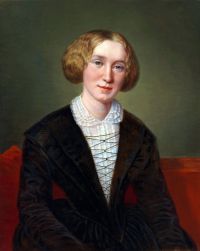
George Eliot

George Eliot

Summary

Portrait of George Eliot George Eliot The Works of George Eliot (1878)

And what could be more unlike that Lantern Yard world than the world in Raveloe?—orchards looking lazy with neglected plenty; the large church in the wide churchyard, which men gazed at lounging at their own doors in service-time; the purple-faced farmers jogging along the lanes or turning in at the Rainbow; homesteads, where men supped heavily and slept in the light of the evening hearth, and where women seemed to be laying up a stock of linen for the life to come. There were no lips in Raveloe from which a word could fall that would stir Silas Marner's benumbed faith to a sense of pain.
Source: Wikisource

Portrait of George Eliot George Eliot The Works of George Eliot (1878)

I had been witnessing the last fitful yearning glance his soul had cast back on the spent inheritance of life—the last faint consciousness of love he had gathered from the pressure of my hand. What are all our personal loves when we have been sharing in that supreme agony? In the first moments when we come away from the presence of death, every other relation to the living is merged, to our feeling, in the great relation of a common nature and a common destiny.
In that state of mind I joined Bertha in her private sitting-room.
Source: Wikisource

Portrait of George Eliot George Eliot The Works of George Eliot (1878)

I have never fully unbosomed myself to any human being; I have never been encouraged to trust much in the sympathy of my fellow-men. But we have all a chance of meeting with some pity, some tenderness, some charity when we are dead: it is the living only who cannot be forgiven—the living only from whom men's indulgence and reverence are held off, like the rain by the hard east wind. While the heart beats, bruise it—it is your only opportunity; while the eye can still turn towards you with moist timid entreaty, freeze it with an icy unanswering gaze;
Source: Wikisource

Get perspective with Kwize: daily news enlightened by great literature