Summary

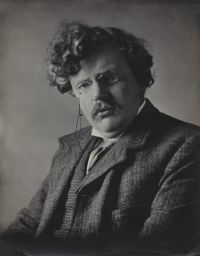
Portrait of Gilbert Keith Chesterton Gilbert Keith Chesterton Charles Dickens — XII: A Note on the Future of Dickens (1906)

No one but an Englishman could have described the democracy as consisting of free men, but yet of funny men. In other countries where the democratic issue has been more bitterly fought, it is felt that unless you describe a man as dignified you are describing him as a slave. This is the only final greatness of a man; that he does for all the world what all the world cannot do for itself. Dickens, I believe, did it.
The hour of absinthe is over. We shall not be much further troubled with the little artists who found Dickens too sane for their sorrows and too clean for their delights.
Source: Wikisource

Portrait of Gilbert Keith Chesterton Gilbert Keith Chesterton Charles Dickens — XII: A Note on the Future of Dickens (1906)

I know that this is an almost impertinent thing to assert, and that its tendency is to bring in those disparaging discussions of other writers in which Mr. Swinburne brilliantly embroiled himself in his suggestive study of Dickens. But my disparagement of the other English Novelists is wholly relative and not in the least positive. It is certain that men will always return to such a writer as Thackeray, with his rich emotional autumn, his feeling that life is a sad but sacred retrospect in which at least we should forget nothing. It is not likely that wise men will forget him.
Source: Wikisource

Portrait of Gilbert Keith Chesterton Gilbert Keith Chesterton Charles Dickens — XII: A Note on the Future of Dickens (1906)

The principle is so light-headedly absurd that it is hard to imagine any literary man submitting to it for an instant. If ever he invented a bad auctioneer he must immediately balance him with a good auctioneer; if he should have conceived an unkind philanthropist, he must on the spot, with whatever natural agony and toil, imagine a kind philanthropist. The complaint is frantic; yet Dickens, who tore people in pieces for much fairer complaints, liked this complaint of his Jewish correspondent.
Source: Wikisource

Get perspective with Kwize: daily news enlightened by great literature