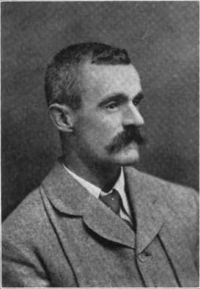
Harold Bindloss

Harold Bindloss

Summary

Portrait of Harold Bindloss Harold Bindloss Harding of Allenwood

He was ready to fight against her relatives' opposition; but, even if he had the power, he would put no pressure on the girl. If he was the man she ought to marry, she would know.
A breeze got up, rounded clouds with silver edges gathered in the west, streaking the prairie with patches of indigo shadow, and the air grew cooler as the sun sank. The big oxen steadily plodded on, the dry grass crackled beneath the share as the clods rolled back, and by degrees Harding's mind grew tranquil—as generally happened when he was at work.
Source: Gutenberg

Portrait of Harold Bindloss Harold Bindloss Harding of Allenwood

As far as one could see, the soil was thin alluvial loam, interspersed with the stiff "gumbo" that grows the finest wheat; but the plow had not yet broken its surface. Small towns were springing up along the railroad track, but the great plain between the Saskatchewan and the Assiniboine was, for the most part, still a waste, waiting for the tide of population that had begun to flow.
Harding was a born pioneer, and his expression grew intent as he gazed across the wilderness.
"What will this prairie be like, Fred, when those poplars are tall enough to cut?"
Source: Gutenberg

Portrait of Harold Bindloss Harold Bindloss Harding of Allenwood

Spring comes suddenly in the Northwest, the summer is hot but short, and the grain must be sown early if it is to escape the autumn frost.
When they reached the edge of the breaking, Harding stopped the engine, and, taking a spanner from a box, turned to look about. The blue sky was flecked with fleecy clouds driving fast before the western breeze. The grass had turned a vivid green, and was checkered by clusters of crimson lilies. The ducks and geese had gone, but small birds of glossy black plumage with yellow bars on their wings fluttered round the harrows.
Source: Gutenberg

Get perspective with Kwize: daily news enlightened by great literature