Summary

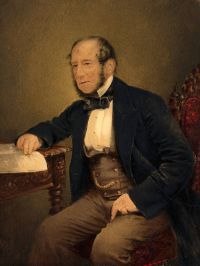
Portrait of Henry Adams Henry Adams The Education of Henry Adams — Chapter 26… (1918)

For human purposes a point must always be soon reached where larger synthesis is suicide.
Politics and geology pointed alike to the larger synthesis of rapidly increasing complexity; but still an elderly man knew that the change might be only in himself. The admission cost nothing. Any student, of any age, thinking only of a thought and not of his thought, should delight in turning about and trying the opposite motion, as he delights in the spring which brings even to a tired and irritated statesman the larger synthesis of peach-blooms, cherry-blossoms, and dogwood, to prove the folly of fret.
Source: Wikisource

Portrait of Henry Adams Henry Adams The Education of Henry Adams — Chapter 26… (1918)

All one’s life, one had struggled for unity, and unity had always won. The National Government and the national unity had overcome every resistance, and the Darwinian evolutionists were triumphant over all the curates; yet the greater the unity and the momentum, the worse became the complexity and the friction. One had in vain bowed one’s neck to railways, banks, corporations, trusts, and even to the popular will as far as one could understand it,—or even further;—the multiplicity of unity had steadily increased, was increasing, and threatened to increase beyond reason.
Source: Wikisource

Portrait of Henry Adams Henry Adams The Education of Henry Adams — Chapter 26… (1918)

Truly the animal that is to be trained to unity must be caught young. Unity is vision; it must have been part of the process of learning to see. The older the mind, the older its complexities, and the further it looks, the more it sees, until even the stars resolve themselves into multiples; yet the child will always see but one. Adams asked whether geology since 1867 had drifted towards unity or multiplicity, and he felt that the drift would depend on the age of the man who drifted.
Source: Wikisource

Get perspective with Kwize: daily news enlightened by great literature