Summary

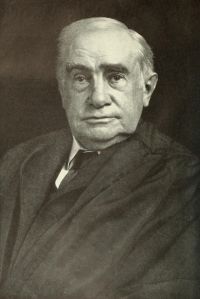
Portrait of Henry Billings Brown Henry Billings Brown Boyden Power-Brake Company v. Westinghouse…

Because the law requires a patentee to explain the mode of operation of his peculiar machine which distinguishes it from others, it does not authorize a patent for a 'mode of operation as exhibited in the machine.' Much less can any inference be drawn from the statute that an inventor who has made an improvement in a machine, and thus effects the desired result in a better or cheaper manner than before, can include all previous inventions, and have a claim to the whole art, discovery, or machine which he has improved.
Source: Wikisource

Portrait of Henry Billings Brown Henry Billings Brown Boyden Power-Brake Company v. Westinghouse…

To say that the patentee of a pioneer invention for a new mechanism is entitled to every mechanical device which produces the same result is to hold, in other language, that he is entitled to patent his function. Mere variations of form may be disregarded, but the substance of the invention must be there. As was said in Burr v. Duryee, 1 Wall. 531, 573, an infringement 'is a copy of the thing described in the specification of the patentee, either without variation, or with such variations as are consistent with its being in substance the same thing.
Source: Wikisource

Portrait of Henry Billings Brown Henry Billings Brown Boyden Power-Brake Company v. Westinghouse…

To what liberality of construction these claims are entitled depends, to a certain extent, upon the character of the invention, and whether it is what is termed, in ordinary parlance, a 'pioneer.' This word, although used somewhat loosely, is commonly understood to denote a patent covering a function never before performed, a wholly novel device, or one of such novelty and importance as to mark a distinct step in the progress of the art, as distinguished from a mere improvement or perfection of what had gone before.
Source: Wikisource

Get perspective with Kwize: daily news enlightened by great literature