Summary

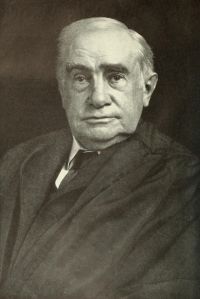
Portrait of Henry Billings Brown Henry Billings Brown Constable v. National Steamship Company…

The position of the parties had not changed in the interval; no new consideration moved from the libelants; and, while the contract was nominally made for their benefit, this gift of the collector was purely a voluntary one. Indeed, the contract seems really to have been for the protection of the collector himself. Under these circumstances, it is clearly the duty of this court to harmonize these contracts, if it be possible to do so. It is by no means a universal rule that a person may sue upon a contract made for his benefit, to which he was not a party.
Source: Wikisource

Portrait of Henry Billings Brown Henry Billings Brown Constable v. National Steamship Company…

The liability of the company for the goods while upon the wharf is a mere incident to its liability for them while upon the ship, and, if the liability is more extensive under the incidental contract of storage than it was under the principal contract of carriage, it is an exception to the general rule that the incidental liability of a contracting party is not broader than his liability upon the principal contract.
Source: Wikisource

Portrait of Henry Billings Brown Henry Billings Brown Constable v. National Steamship Company…

No good reason, however, is perceived why, if a wise policy requires the exemption of the carrier from a fire occurring without his fault, such exemption should not extend to any such fire while the goods are in his possession and under his control, or at any time before actual delivery to the consignee. But, however this may be, there can be no question of the power or the carrier to extend his statutory exemption from fire to such as occurs after the discharge of the cargo, by special stipulation to that effect in the bill of lading.
Source: Wikisource

Get perspective with Kwize: daily news enlightened by great literature