Summary

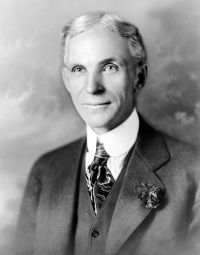
Portrait of Henry Ford Henry Ford My Life and Work — 7. The Terror of the Machine (1922)

Is a man the happier for starving? If he is the happier for using a machine to less than its capacity, is he happier for producing less than he might and consequently getting less than his share of the world's goods in exchange?
I have not been able to discover that repetitive labour injures a man in any way. I have been told by parlour experts that repetitive labour is soul--as well as body--destroying, but that has not been the result of our investigations.
Source: Wikisource

Portrait of Henry Ford Henry Ford My Life and Work — 7. The Terror of the Machine (1922)

Repetitive labour--the doing of one thing over and over again and always in the same way--is a terrifying prospect to a certain kind of mind. It is terrifying to me. I could not possibly do the same thing day in and day out, but to other minds, perhaps I might say to the majority of minds, repetitive operations hold no terrors. In fact, to some types of mind thought is absolutely appalling.
Source: Wikisource

Portrait of Henry Ford Henry Ford My Life and Work — 7. The Terror of the Machine (1922)

We measure on each job the exact amount of room that a man needs; he must not be cramped--that would be waste. But if he and his machine occupy more space than is required, that also is waste. This brings our machines closer together than in probably any other factory in the world. To a stranger they may seem piled right on top of one another, but they are scientifically arranged, not only in the sequence of operations, but to give every man and every machine every square inch that he requires and, if possible, not a square inch, and certainly not a square foot, more than he requires.
Source: Wikisource

Get perspective with Kwize: daily news enlightened by great literature