Summary

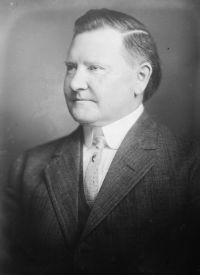
Portrait of Herbert John Webber Herbert John Webber Spermatogenesis and fecundization of zamia

The spermatozoid which reaches the egg cell first would seem to be the one which causes fecundation. That one which is utilized in fecundation swims into the cytoplasm of the egg cell for a short distance, where it comes to rest and undergoes change. The nucleus slips out of its cytoplasmic sheath and passes on alone from this point to the egg nucleus, with which it unites. The spiral ciliferous band, which forms such an interesting part of the spermatozoid, remains at the apex of the egg cell in the place where the nucleus left it.
Source: Wikisource

Portrait of Herbert John Webber Herbert John Webber Spermatogenesis and fecundization of zamia

In Zamia, however, the writer has frequently observed that the numerous pollen tubes are in various stages of development. One tube may have the spermatozoids swimming about in it, while in an adjoining tube the central cell has not yet completed its division. When a tube has burst and dicharged its spermatozoids it shrivels into an unrecognizable, small, and almost indiscernible mass. Tubes in an advanced stage may burst and leave a liquid in the archegonial chamber, while other tubes remain entire. In Zamia a portion of the fluid is certainly furnished by the pollen tube.
Source: Wikisource

Portrait of Herbert John Webber Herbert John Webber Spermatogenesis and fecundization of zamia

The relation of the centrospheres to spindle formation was not traced out in detail, but its connection with the mature spindle and later stages of division is unmistakable. In fecundation no visible centrosphere is brought into the egg by the spermatozoid, and Farmer and Williams find no support for the statement of Strasburger that an apparent connection can be traced between the position of the two centrospheres of the dividing egg and the limits of the portion of the oospore nucleus which belonged to the sperm.
Source: Wikisource

Get perspective with Kwize: daily news enlightened by great literature