Summary

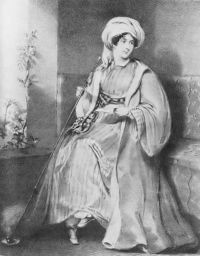
Portrait of Hester Stanhope Hester Stanhope Memoirs of the Lady Hester Stanhope… (1846)

The city of Beyrout had undergone great changes since the conquest of Syria by Ibrahim Pasha; not in the tortuosity of its streets, not in its broken pavement and the filthy entrances to its houses, but in the appearance of its population. Formerly, a few straggling Europeans, or Levantines in European dresses, were seen hanging about the doors of a warehouse or two in the Frank quarter; and occasionally a European woman, the wife of a consul or a merchant, would steal from one house to another, as if afraid, in her way, of insult from a fanatic Turk.
Source: Gutenberg

Portrait of Hester Stanhope Hester Stanhope Memoirs of the Lady Hester Stanhope… (1846)

When I think of the tawdry things for which people sigh, and the empty stuff which their ambition pursues, I heartily despise them all. There is nothing in their vain-glorious career worth the trouble of aspiring after. My ambition is to please God. I should be what I intrinsically am, on a dunghill. My name is greater than ever it was. In India, I am as well known as in London or Constantinople. Why, a Turk told one of my people who was at Constantinople that there is not a Turkish child twenty miles round that place who has not heard of me.
Source: Gutenberg

Portrait of Hester Stanhope Hester Stanhope Memoirs of the Lady Hester Stanhope… (1846)

There is no doubt that, by prolonging my stay on Mount Lebanon, I might have been of considerable service to her ladyship. She was about to shut herself up alone, without money, without books, without a soul she could confide in; without a single European, male or female, about her; with winter coming on, beneath roofs certainly no longer waterproof, and that might fall in; with war at her doors, and without any means of defence except in her own undaunted courage; with no one but herself to carry on her correspondence
Source: Gutenberg

Get perspective with Kwize: daily news enlightened by great literature