Summary

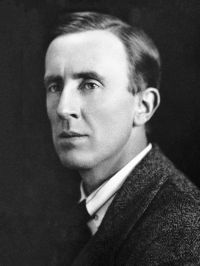
Portrait of J. R. R. Tolkien J. R. R. Tolkien A Middle English Vocabulary, Designed for use with Sisam's Fourteenth Century Verse & Prose

These are the features of the older language which an English reader is predisposed to pass over, satisfied with a half-recognition: and space seldom permits of their adequate treatment in a compendious general dictionary or the word-list to a single text. So in making a glossary for use with a book itself designed to be a preparation for the reading of complete texts, I have given exceptionally full treatment to what may rightly be called the backbone of the language.
Source: Gutenberg

Portrait of J. R. R. Tolkien J. R. R. Tolkien A Middle English Vocabulary, Designed for use with Sisam's Fourteenth Century Verse & Prose

The Old English or Old French forms cited are those that best illustrate the Middle English; in consequence the Old English forms frequently differ from normal West-Saxon, and the Old French forms are especially those of the French current in England (Anglo-French is rarely specified) . Old Norse words have usually been cited in the normal spelling (e.g. of Zoëga's Old Icelandic Dictionary) . Accordingly, long vowels in Old Norse words are marked as in bráþ-r. In Old English words stable long vowels are marked as in brād
Source: Gutenberg

Portrait of J. R. R. Tolkien J. R. R. Tolkien A Middle English Vocabulary, Designed for use with Sisam's Fourteenth Century Verse & Prose

For the convenience of beginners the glossary is liberally supplied with cross references, and the prefixed Table summarizes the principal variations of form or spelling. Particular attention should be given to the following points of arrangement: (i) Ȝ has a separate alphabetical place following G
Source: Gutenberg

Get perspective with Kwize: daily news enlightened by great literature