Summary

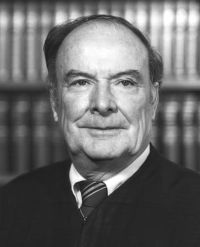
Portrait of J. Skelly Wright J. Skelly Wright Lead Industries Association v. EPA… (1980)

We see no reason why this court should put a gloss on Congress' scheme by requiring the Administrator to show that there is a medical consensus that the effects on which the lead standards were based are "clearly harmful to health." All that is required by the statutory scheme is evidence in the record which substantiates his conclusions about the health effects on which the standards were based.
Source: Wikisource

Portrait of J. Skelly Wright J. Skelly Wright Lead Industries Association v. EPA… (1980)

How else can they act, given a mandate to protect the public health but only a slight or nonexistent data base from which to draw? * * * Sometimes, of course, relatively certain proof of danger or harm from such modifications can readily be found. But, more commonly, "reasonable medical concerns" and theory long precede certainty. Yet the statutes and common sense demand regulatory action to prevent harm, even if the regulator is less than certain that harm is otherwise inevitable. Undoubtedly, certainty is the scientific ideal to the extent that even science can be certain of its truth.
Source: Wikisource

Portrait of J. Skelly Wright J. Skelly Wright Lead Industries Association v. EPA… (1980)

They are not ultimate; they are not maximum; they are minimal. And, if I may highlight this, testimony on the health question over the last 7 years over and over again has made the point that there is no such thing as a threshold for health effects. Even at the national primary standard level, which is the health standard, there are health effects that are not protected against.
Source: Wikisource

Get perspective with Kwize: daily news enlightened by great literature