Summary

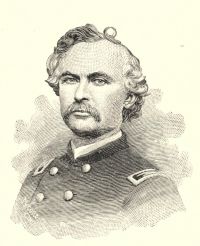
Portrait of John Azor Kellogg John Azor Kellogg Capture and Escape: A Narrative of Army and Prison Life

Imagine, if you can, the feelings of that group of officers.
We had all been reared at the North, in a land of schools and churches. We were men of ordinary intelligence, accustomed to mingling in the society of our fellows, men who at home or in the army were qualified by education and character to be called gentlemen, and possessed at least the ordinary feelings of manhood. Yet there we were, run down and standing like brutes at bay, to defend ourselves from a pack of hounds. One glance at the faces of my comrades revealed more of their feelings than could printed pages.
Source: Gutenberg

Portrait of John Azor Kellogg John Azor Kellogg Capture and Escape: A Narrative of Army and Prison Life

In camp, here and there, might have been seen a regiment executing the beautiful evolutions of battalion drill, and perhaps a camp guard being mounted, the air meanwhile resounding with the martial music so inspiring to the soldier. To the civilian all would have seemed confusion; but to the soldier the scene simply represented an army at rest; his eye could only see the monotonous details of camp life, the every-day life of the soldier.
Source: Gutenberg

Portrait of John Azor Kellogg John Azor Kellogg Capture and Escape: A Narrative of Army and Prison Life

We saw the Confederate officer and a guard inspecting the ground in the vicinity of the tunnel. This they did by stabbing a bayonet into the ground, as no one could detect the existence of the tunnel by the eye, the mouth being covered and dirt swept over it, so as to make it resemble the surface.
Imagine our feelings as we saw them approach the mouth of the hole. That tunnel, to us, was the door to liberty. It was the telescope through which we could see wife, children, and friends. Men who never prayed before, prayed now that it might not be discovered.
Source: Gutenberg

Get perspective with Kwize: daily news enlightened by great literature