Summary

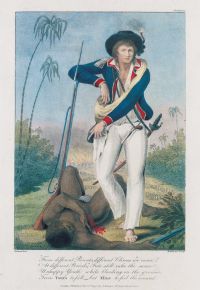
Portrait of John Gabriel Stedman John Gabriel Stedman Narrative, of a five years' expedition against the Revolted Negroes of Surinam…

I have seen the most cruel tortures inflicted, for submitting to the desire of a husband, or for refusing the same to a libidinous master, and more frequently a rascally overseer: nay, even on the most innocent, from the false accusations of a lustful woman, prompted alone by jealousy. I have seen in other places, negro slaves as well treated as the most favoured servants in England; and as I have seen some sailors, soldiers, and apprentices, most tyrannically treated when under the command of ill-tempered despots, I must pronounce the condition of such not to be envied even by negroes.
Source: Gutenberg

Portrait of John Gabriel Stedman John Gabriel Stedman Narrative, of a five years' expedition against the Revolted Negroes of Surinam…

Here, in the different characters of a Commander—a Rebel Negro—a Planter, and a Slave—not only tyranny are exposed—but benevolence and humanity are unveiled to the naked eye. Here the Warrior—the Historian—the Merchant—and the Lover of Natural Philosophy, will meet with some gratification; while, for having introduced my private adventures, I must make some apology—but none for those of the lovely Slave, who makes not the least interesting figure in these pages—as female virtue in distress, especially when accompanied with youth and beauty, must ever claim protection.
Source: Gutenberg

Portrait of John Gabriel Stedman John Gabriel Stedman Narrative, of a five years' expedition against the Revolted Negroes of Surinam…

The Indians always fight their battles by midnight: indeed their contests resemble more a siege than a battle, as these broils consist only in surrounding the hamlets of their enemies while they are asleep, making prisoners of the women, boys, and girls, while they shoot the men with poisoned arrows, or with their clubs or apootoos divide their sculls when they come to close quarters; they also scalp their male prisoners, bring home their hair, and even their bones, as trophies of war, and presents to their wives, unless they intend to sell them to the Europeans at Paramaribo.
Source: Gutenberg

Get perspective with Kwize: daily news enlightened by great literature