Summary

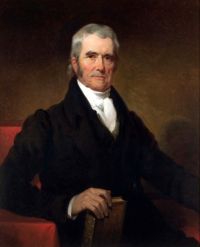
Portrait of John Marshall John Marshall Craig v. Missouri — Opinion of the Court

In rendering judgment for the plaintiff, the court for the state of Missouri decided in favour of the validity of a law which is repugnant to the constitution of the United States.
In the argument, we have been reminded by one side of the dignity of a sovereign state; of the humiliation of her submitting herself to this tribunal; of the dangers which may result from inflicting a wound on that dignity: by the other, of the still superior dignity of the people of the United States; who have spoken their will, in terms which we cannot misunderstand.
Source: Wikisource

Portrait of John Marshall John Marshall Craig v. Missouri — Opinion of the Court

Such a medium has been always liable to considerable fluctuation. Its value is continually changing; and these changes, often great and sudden, expose individuals to immense loss, are the sources of ruinous speculations, and destroy all confidence between man and man. To cut up this mischief by the roots, a mischief which was felt through the United States, and which deeply affected the interest and prosperity of all; the people declared in their constitution, that no state should emit bills of credit.
Source: Wikisource

Portrait of John Marshall John Marshall Craig v. Missouri — Opinion of the Court

During the revolution, the 'bills of credit' which were issued by the authority of the states, and by that of congress, were in most cases made a tender; and this was the objectionable feature in them. So long as no objection to receive them is imposed by the law which directs or authorises their emission, they can injure no one. Free to refuse them, the citizen may protect himself from loss by their depreciation, by rejecting them.
Source: Wikisource

Get perspective with Kwize: daily news enlightened by great literature