Emission

Definition and stakes

Various,  Popular Science Monthly (1884)

“ The optical theory which reigned in the scientific world until the beginning of the present century was known as the theory of emission, which assumed that all luminous effects are due to the darting, rebounding, and deflecting of some kind of material corpuscles or particles. ”
Source: Wikisource

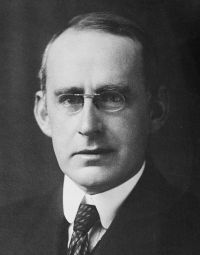
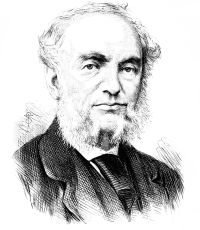
Portrait of Sir Arthur Stanley Eddington Sir Arthur Stanley Eddington,  Stars and atoms (1927)

“ The collection of observational data as to the activity of liberation of subatomic energy is part of the routine of practical astronomy; and we have to pursue the usual course of arranging the measurements into some kind of coherence, so as to find out how the output is related to the temperature, density, or age of the material supplying it—in short, to discover the laws of emission. ”
Source: Gutenberg

Arthur Selwyn-Brown,  How to Use the Popular Science Library…

“ It is of importance in molecular and atomic investigations, in osmosis, electrolysis, and in most questions dealing with thermodynamics.
Light is generally defined as the sense impression received by the eye. It was formerly believed that it was caused by streams of corpuscles emitted by the source of light. This was known as the emission theory. Early in the nineteenth century, the undulatory displaced the emission theory. According to this, light is a transverse vibratory motion extended longitudinally through the ether.
”
Source: Gutenberg

Get perspective with Kwize: daily news enlightened by great literature