Summary

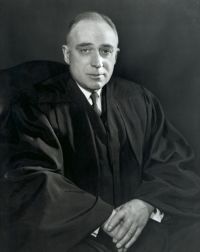
Portrait of John Marshall Harlan II John Marshall Harlan II Jones v. Alfred H. Mayer Co. — Dissent

Adoption of a 'state action' construction of the Civil Rights Act would therefore have the additional merit of bringing its interpretation into line with that of the Fourteenth Amendment, which this Court has consistently held to reach only 'state action.' This seems especially desirable in light of the wide agreement that a major purpose of the Fourteenth Amendment, at least in the minds of its congressional proponents, was to assure that the rights conferred by the then recently enacted Civil Rights Act could not be taken away by a subsequent Congress.
Source: Wikisource

Portrait of John Marshall Harlan II John Marshall Harlan II Jones v. Alfred H. Mayer Co. — Dissent

Senator Trumbull several times reiterated this view. On February 2, replying to Senator Davis of Kentucky, he said:
'Why, sir, if the State of Kentucky makes no discrimination in civil rights between its citizens, this bill has no operation whatever in the State of Kentucky. Are all the rights of the people of Kentucky gone because they cannot discriminate and punish one man for doing a thing that they do not punish another for doing?
Source: Wikisource

Portrait of John Marshall Harlan II John Marshall Harlan II Jones v. Alfred H. Mayer Co. — Dissent

If he is nominally freed by the amendment to the Constitution, * * * he has simply the labor of his hands on which he can depend. Any combination of men in his neighborhood can prevent him from having any chance to support himself by his labor. They can pass a law that a man not supporting himself by labor shall be deemed a vagrant, and that a vagrant shall be sold.' [53]
These remarks clearly were addressed to discriminations effectuated by law, or sanctioned by 'custom.' As such, they would have been reached by the bill even under a 'state action' interpretation.
Source: Wikisource

Get perspective with Kwize: daily news enlightened by great literature