Summary

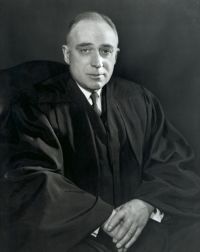
Portrait of John Marshall Harlan II John Marshall Harlan II Lear, Inc. v. Adkins — Opinion of the Court

Since the Patent Office makes an inventor's ideas public when it issues its grant of a limited monopoly, [15] a potential licensee has access to the inventor's ideas even if he does not enter into an agreement with the patent owner. Consequently, a manufacturer gains only two benefits if he chooses to enter a licensing agreement after the patent has issued. First, by accepting a license and paying royalties for a time, the licensee may have avoided the necessity of defending an expensive infringement action during the period when he may be least able to afford one.
Source: Wikisource

Portrait of John Marshall Harlan II John Marshall Harlan II Lear, Inc. v. Adkins — Opinion of the Court

Thus in the large number of cases in which licensing agreements contained restrictions that were arguably illegal under the antitrust laws, the doctrine of estoppel was a dead letter. Justice Frankfurter, in dissent, went even further, concluding that Katzinger and MacGregor had done all but repudiate the estoppel rule: 'If a doctrine that was vital law for more than ninety years will be found to have now been deprived of life, we ought at least to give it decent public burial.' 329 U.S., at 416, 67 S.Ct., at 428.
Source: Wikisource

Portrait of John Marshall Harlan II John Marshall Harlan II Lear, Inc. v. Adkins — Opinion of the Court

While the court recognized that generally a manufacturer is free to challenge the validity of an inventor's patent, it held that 'one of the oldest doctrines in the field of patent law establishes that so long as a licensee is operating under a license agreement he is estopped to deny the validity of his licensor's patent in a suit for royalties under the agreement.
Source: Wikisource

Get perspective with Kwize: daily news enlightened by great literature