
“ In a sense it includes several modern royalties, for the crown in several modern constitutional states is a corporation sole, and the monarch the unique, unlimited, and so far as necessity goes, quite functionless shareholder. He may be a heavy-eyed sensualist, a small-minded leader of fashion, a rival to his servants in the gay science of etiquette, a frequenter of race-courses and music-halls, a literary or scientific quack, a devotee, an amateur anything—the point is that his income and sustenance have no relation whatever to his activities. ”
Royalties
Definition and stakes
Royalty refers to a political system centered on a monarch, historically linked to divine authority and symbolic influence. Anthropologists such as Frazer and Dumézil emphasized its sacred aspects, while writers like H.G. Wells noted its changing role in constitutional governments, where rulers frequently act as ceremonial figures separate from active governance.
Emma Helen Blair stressed the king's responsibility to enforce fair laws, and Frederic Ogg highlighted the monarchy's role in symbolizing national unity. These viewpoints illustrate royalty as both a remnant of sacred tradition and a practical institution, blending ceremony with the practical demands of statehood.
Quotes about “royalties”
Emma Helen Blair, The Philippine Islands, 1493-1803 (1903)
“ They consider your Majesty a cruel king, and think that you are trying only to profit by their estates and to claim their personal service—although all is so much to the contrary on the part of your Majesty, as witness the holy laws and ordinances which, for the good government of these lands, your Majesty has made and ordered to be observed. ”
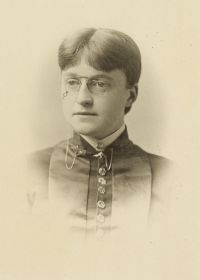 Kate Milner Rabb,
National Epics
Kate Milner Rabb,
National Epics
“ If they succeed in making out the noble game, They will win applause and augment enjoyment: Then slaves and money and tribute and taxes, I will send to him as far as I have the means; For a monarch is to be esteemed for his wisdom, Not for his treasure, or his men, or his lofty throne. But if the King and his counsellors are not able to do all this And their minds are not bright enough to comprehend it, He ought not to desire from us tribute or treasure, And his wise soul, alas! must come to grief; And when he seeth our minds and genius to be subtler than theirs. ”
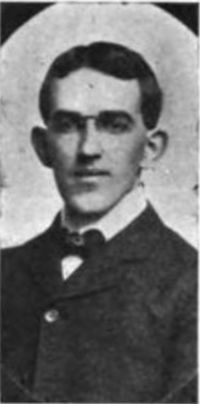 Frederic Austin Ogg,
The Governments of Europe
Frederic Austin Ogg,
The Governments of Europe
“ Monarchy remains impregnably entrenched because the crown, in addition to comprising an accustomed feature of the governmental economy, fulfills specific ends which are recognized universally to be eminently worth while, if not indispensable. As a social, moral, and ceremonial agency, and as a visible symbol of the unity of the nation; king and court occupy an immeasurable place in the life and thought of the people ”
Act Anent the demission of the Crown in favour of our Sovereign Lord… (1567)
“ Forasmuch, as since our arrival, and returning within our Realm, we, willing the common commodity, wealth, profit, and quietness thereof, lieges, and subjects of the same, have employed our body, spirit, whole senses, and forces to govern the same, in such sort that our royal, and honourable estate might stand, and continue with us, and our posterity, and our loving, and kind lieges might enjoy the quietness of true subjects ”
Jean Paul Hippolyte Emmanuel Adhémar Esmein, 1911 Encyclopædia Britannica (1911)
“ At last, just as the kingdom had become the personal property of the king, so the officials—dukes, counts, royal vicars, tribunes, centenarii—who had for the most part bought their unpaid offices by means of presents to the monarch, came to look upon the public service rather as a mine of official wealth than as an administrative organization for furthering the interests, material or moral, of the whole nation. ”
 John Ruskin,
Sesame and Lilies
John Ruskin,
Sesame and Lilies
“ But I have no words for the wonder with which I hear Kinghood still spoken of, even among thoughtful men, as if governed nations were a personal property, and might be bought and sold, or otherwise acquired, as sheep, of whose flesh their king was to feed, and whose fleece he was to gather; as if Achilles’ indignant epithet of base kings, “people-eating,” were the constant and proper title of all monarchs; and the enlargement of a king’s dominion meant the same thing as the increase of a private man’s estate! ”
Dr. Doran, London in the Jacobite Times (1877)
“ But, Sir, you are to consider that all those who consider that a king has a right to his crown, as a man has to his estate, which is the just opinion, would be for restoring the king who certainly has the hereditary right, could he be trusted with it ”
Emma Helen Blair, The Philippine Islands, 1493–1898 (1903)
“ The king, our lord, also is profited by those who hold positions in the service of his royal crown; for they, with the tributes, assist in the great expenses which his royal patrimony incurs for the churches, religious orders, and ministers of the evangelical teaching, and for the supplies necessary for their maintenance. ”
Jean Paul Hippolyte Emmanuel Adhémar Esmein, 1911 Encyclopædia Britannica (1911)
“ By giving the king the ecclesiastical patronage they not only made a docile instrument of him, but endowed him with a mine of wealth, even more productive than the sale of offices, and a power of favouring and rewarding that transformed a needy and ill-obeyed king into an absolute monarch. ”
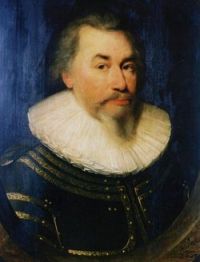 Robert Filmer,
Patriarcha — Chapter III
(1680)
Robert Filmer,
Patriarcha — Chapter III
(1680)
“ For those who will have a King, are bound to allow him Royal maintenance, by providing Revenues for the CROWN, Since it is both for the Honour, Profit, and Safety too of the People, to have their King Glorious, Powerful, and abounding in Riches, besides, we all know the Lands and Goods of many Subjects may be ofttimes Legally taken by the King, either by Forfeitures, Escheat, Attainder, Outlawry, Confiscation, or the like. ”
William R. Shepherd, The life of Poggio Bracciolini (1837)
“ For the sons of merchants and tradesmen who have inherited large fortunes from their fathers, by purchasing an estate and living in the country on its produce, compose an inferior order of nobility, and transmit to their sons all the honours of the aristocracy: and those who have lived in the service of the great barons, by receiving from their liege lords a grant of land, attain to the rank of nobility. ”
Lucy Phillimore, Sir Christopher Wren: His Family and His Times
“ Those they were, who endeavouring to share three Crowns and put them in their own pockets, have transformed this free kingdom into a large gaol, to keep the liberty of the subject: they who maintain 100,000 robbers and murderers by sea and land, to protect our lives and the propriety of our goods ... they who have possessed themselves of his majesty’s towns, navy, and magazines, to make him a glorious king; who have multiplied oaths, protestations, vows, leagues and covenants, for ease of tender consciences ”
Sir William Blackstone, Commentaries on the Laws of England…
“ For as the king, by the very descent of the crown, is fully invested with all the rights and bound to all the duties of sovereignty, before his coronation; so the subject is bound to his prince by an intrinsic allegiance, before the superinduction of those outward bonds of oath, homage, and fealty ”
 Theodore Parker,
The Collected Works of Theodore Parker
(1864)
Theodore Parker,
The Collected Works of Theodore Parker
(1864)
“ Political offices are chiefly monopolized by men of famous birth or great riches. The king, the chief officer of the land, must surpass all others in wealth, and the pomp and circumstance which comes thereof, and in aristocracy of birth. He is not merely noble but royal; his right to rule is not at all derived from the people, but from his birth. Thus he has the two essentials of aristocratic influence, birth and wealth, not merely in the heroic degree, but in the supreme degree. ”
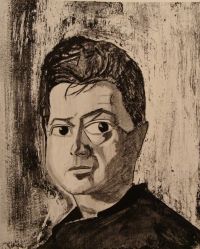 Francis Bacon,
The Harvard Classics Vol. 3
(1909)
Francis Bacon,
The Harvard Classics Vol. 3
(1909)
“ To conclude: no man can by care taking (as the Scripture saith) add a cubit to his stature, in this little model of a man's body; but in the great frame of kingdoms and commonwealths, it is in the power of princes or estates to add amplitude and greatness to their kingdoms; for by introducing such ordinances, constitutions, and customs, as we have now touched, they may sow greatness to their posterity and succession. ”
S. A. Reilly, Our Legal Heritage, King AEthelbert… (2012)
“ Who, though there were danger in repealing our grants, yet what danger would I not rather incur for your good than I would suffer them still to continue? I know the title of a king is a glorious title, but assure yourself that the shining glory of princely authority hath not so dazzled the eyes of our understanding but that we well know and remember that we also are to yield an account of our actions before the great Judge. To be a king and wear a crown is a thing more glorious to them that see it than it is pleasant to them that bear it. ”
G. R. Gleig, Germany, Bohemia, and Hungary, Visited in 1837…
“ The nobles were divided into princes, prelates, barons of the kingdom, and magnates, whose rights, though in some trifling respects different, were yet so much akin as to permit their being treated as political equals. Next to them, yet claiming the essential privileges of nobility, came the king's chief retainers, with the holders of fiefs under the princes and prelates, and the principal retainers of the magnates; and finally, a humbler class followed, who, corresponding to our territorial but untitled aristocracy, are now content to bear the appellation of eidelmen, or gentry. ”
“ But if he fails to execute this my royal command, then, as a just but mild monarch, I shall give orders that you and he are taken, and first dipped in tar and then in feathers, and you shall be executed in the market-place for the entertainment of my courtiers.’And a smile played round the King’s lips as he finished speaking, and his courtiers and counsellors shook with laughter when they thought of the old woman’s folly, and praised the King’s wise device, and said to each other, ‘What a joke it will be when we see the pair of them tarred and feathered! ”
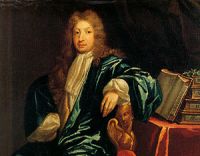 John Dryden,
Dryden's Works Vol. 3
John Dryden,
Dryden's Works Vol. 3
“ Great monarchs, like your father, often give What is above a subject to receive. But faithful officers should countermand And stop the gift, that passes through their hand; And to their prince that mass of wealth restore, Which, lavished thus, would make whole nations poor. ”
 Frédéric Bastiat,
Essays on Political Economy
(1874)
Frédéric Bastiat,
Essays on Political Economy
(1874)
“ This crown testifies that you have performed a service for society, and, moreover, it shows the value of it. It bears witness, besides, that you have not yet obtained from society a real equivalent service, to which you have a right. To place you in a condition to exercise this right, at the time and in the manner you please, society, by means of your client, has given you an acknowledgment, a title, a privilege from the republic, a counter, a crown in fact, which only differs from executive titles by bearing its value in itself ”
R. Elton Smile, The Manatitlans
“ We are fully aware of the difficulty you experience in divesting yourselves of the reverential awe inspired by the sounding appellations of king, emperor, prince, and other titles bestowed for self-gratulation in the flights of vanity. But if you will analyze the charter privileges conferred with these vapory titles, you will find that patents of nobility are the real talons of your standard emblem of nationality, which allows the grantee to become a participator with the imperial or kingly beak, in rending the spoils of oppression. ”
William Arthur, The Pope, the Kings and the People
“ The one unworldly profession counts, among its prizes, a triple crown, scores of princedoms, ministries of state, of finance, and even of war, embassies, exceeding many palaces, honours [Pg 101] surpassing those of nobility, gorgeous uniforms, lofty titles, revenues of enormous amount, with powers and dignities bearing a double value—one measurable by the standards of the world, and one immeasurable in the eyes of the faithful. ”
Sir John W. Salmond, Jurisprudence (1913)
“ The visible wearer of the crown is merely the living representative and agent for the time being of this invisible and undying persona ficta, in whom by our law the powers and prerogatives of the government of this realm are vested. When the King in his natural person dies, the property real and personal which he owns in right of his crown and as trustee for the state, and the debts and liabilities which in such right and capacity have been incurred by him, pass to his successors in office, and not to his heirs, executors, or administrators. ”
John Lord, Beacon Lights of History, Volume 08…
“ He believed in caste, in privileges, in monopolies; therefore he would not annul either rank or honor. The nobles were welcome to retain their stars and orders and ribbons and heraldic distinctions, even their parks and palaces and falcons and hounds. They were a favored class, that feudalism had introduced and ages had indorsed; but even they must be subservient to the crown, from which their honors emanated, and hence to order and law, of which the king was the keeper. They must be subjects of the government, as well as allies and supporters. The government was royal, not aristocratic. ”
Various, The Catholic World, Vol. 04, October…
“ In every nation that accepted the reformation the feudal monarchy was retained, and still subsists. The crown in them all is an estate, as in England, and in some of them is, in fact, the only estate recognized by the constitution. ”
Keith Clark, The Spell of Scotland
“ Because no king shall ever wear the crown again, nor wave the scepter, nor wield the sword of state, the Regalia, housed in the Crown Room, and guarded from commoner and king by massive iron grating, is more interesting than any other appanage of royalty in the world. ”
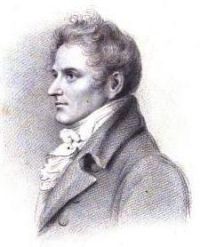 Sir John Carr,
The stranger in France
Sir John Carr,
The stranger in France
“ If the old royalty is ever restored, it is my opinion, and I offer it with becoming deference, that, from personal hatred to the present titular monarch, and the dread of retaliation by a lineal revival of monarchy, the crown will be placed upon the brows of one of the collateral branches of the expatriated family. ”
J. Ewing Ritchie, Here and There in London
“ Exactly opposite us is the Throne; its splendour we but faintly perceive, for it is veiled from vulgar eyes; but there it is—the very spot where Majesty sits, while around her are principalities and powers,—there the royal assent is given to laws which affect the weal or woe of an empire—there, with silvery voice, and faultless delivery, and perfect pronunciation, are spoken royal speeches, greedily bought up in second editions of the morning papers, and flashed along the electric wires to all the great cities of our own and the capitals of other lands. ”
 Agnes Repplier,
In the dozy hours, and other papers
(1894)
Agnes Repplier,
In the dozy hours, and other papers
(1894)
“ It was easier, perhaps, for a monarch to do a gracious and a princely deed when his crown and sceptre were his own property instead of belonging to the state; and picturesqueness, ignore it as we may, is a quality which, like distinction, "fixes the world's ideals." ”
The Babees' Book: Medieval Manners for the Young…
“ An usher or marshal, without fail, must know all the estates of the Church, and the excellent estate of a king with his honourable blood. This is a notable nurture, cunning, curious and commendable.“The estate of the Pope has no peer, an emperor is next him everywhere and a King is correspondent, a high cardinal next in dignity, then a King’s son (ye call him prince) , an archbishop his equal; a duke of the blood royal; a bishop, marquis and earl coequal; a viscount, legate, baron, suffragan and mitred abbot; a baron of the exchequer, the three chief justices and the Mayor of London ”
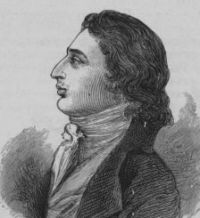 Robert Southey,
History of the Peninsular War, Volume 1…
Robert Southey,
History of the Peninsular War, Volume 1…
“ If your Majesty should not choose to reign in person, I will govern in your royal name, or in my own; for no one but myself can represent your person, possessing, as I do, in my favour, the decision of the laws, and the will of the people; nor can any other person have so much interest in their prosperity. ”
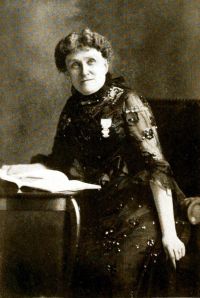 Flora Adams Darling,
Memories of Virginia
(1907)
Flora Adams Darling,
Memories of Virginia
(1907)
“ You shall to your utmost bear faith and allegiance to the King's majesty, his heirs and lawful successors, and shall assist and defend jurisdictions and authorities granted unto his Majesty and annext unto the Crown, against all foreign princes, persons, prelates or potentates whatsoever, be it by act of Parliament or otherwise, and generally in all things you shall be as a faithful and true servant and subject ought to do. ”
Various, The Catholic World, Vol. 17, April…
“ Take an imaginary procession of magnates, financial, political, artistic, royal, or noble, dress them in plain citizen’s garb, and then send in a child to pick out the prizes among them, to distinguish the bishop from the chancellor, the diplomatist from the banker, the king from the scholar. ”
 Godfrey Sweven,
Riallaro: The Archipelago of Exiles
(1901)
Godfrey Sweven,
Riallaro: The Archipelago of Exiles
(1901)
“ There was, of course, a price-list for various kinds and periods of reputation; and a citizen with a large fortune could buy what was for human life immortality. But the chief business of the office was political, to enforce the privileges and enhance the fame of the marble citizens, and especially of those in power—a great noble, a child of the monarch, or one whom the court and the minister delighted to honour. ”
C. S. Stewart, Brazil and La Plata: The personal record of a cruise
“ While content under the constitutional restrictions of his power, and with the prerogatives accorded to the throne, he holds his position and exercises his influence firmly and with a noble regard to what he believes to be the highest interest of the nation; and gives the strength of a mind, endowed with more than ordinary natural gifts, to the promotion of measures calculated to advance the honor, dignity and prosperity of the empire. ”
