Summary

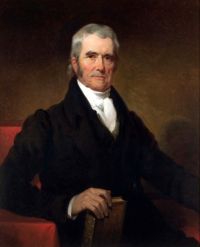
Portrait of John Marshall John Marshall Worcester v. Georgia — Opinion of the Court

The words 'treaty' and 'nation' are words of our own language, selected in our diplomatic and legislative proceedings, by ourselves, having each a definite and well understood meaning. We have applied them to Indians, as we have applied them to the other nations of the earth. They are applied to all in the same sense.
Georgia, herself, has furnished conclusive evidence that her former opinions on this subject concurred with those entertained by her sister states, and by the government of the United States.
Source: Wikisource

Portrait of John Marshall John Marshall Worcester v. Georgia — Opinion of the Court

They are in direct hostility with treaties, repeated in a succession of years, which mark out the boundary that separates the Cherokee country from Georgia; guaranty to them all the land within their boundary; solemnly pledge the faith of the United States to restrain their citizens from trespassing on it; and recognize the pre-existing power of the nation to govern itself.
Source: Wikisource

Portrait of John Marshall John Marshall Worcester v. Georgia — Opinion of the Court

He was apprehended, tried, and condemned, under colour of a law which has been shown to the repugnant to the constitution, laws, and treaties of the United States. Had a judgment, liable to the same objections, been rendered for property, none would question the jurisdiction of this court. It cannot be less clear when the judgment affects personal liberty, and inflicts disgraceful punishment, if punishment could disgrace when inflicted on innocence. The plaintiff in error is not less interested in the operation of this unconstitutional law than if it affected his property.
Source: Wikisource

Get perspective with Kwize: daily news enlightened by great literature