Summary

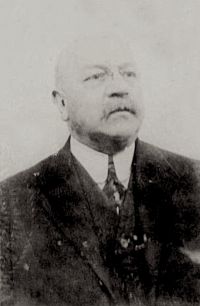
Portrait of John N. Luff John N. Luff,  What Philately Teaches

“ The majority of stamps bear a portrait, usually that of a sovereign. The stamps of our own country present a portrait gallery of our great and heroic dead, for by law the faces of the living may not appear on our stamps or money. This is the reverse of the rule in monarchical countries, where the portrait of the reigning sovereign usually adorns the postal issues. The likeness most frequently seen on postage stamps is that of her most gracious Majesty the Queen of England. ”
Source: Gutenberg

Portrait of John N. Luff John N. Luff,  What Philately Teaches

“ The mechanical details and various methods of engraving are highly interesting but time will not permit their discussion.
27An engraver is seldom expert in more than one style of work. Each makes a specialty of some branch, portraiture, lettering, scroll-work, etc. For this reason several engravers are usually employed on each die for a postage stamp. And in this inability of one individual to do all styles of work equally well lies one of the great securities against counterfeiting.
In the course of making a die, proofs are usually taken and these are much prized by collectors.
”
Source: Gutenberg

Portrait of John N. Luff John N. Luff,  What Philately Teaches

“ The current stamps of the United States are watermarked with the letters "U. S. P. S.", United States Postal Service. This is so set up that the letters read in sequence from any point and in any direction. At one time several of the British colonies in Australia employed paper watermarked with a figure or word of the value of the stamp intended to be printed on it. It can readily be understood that these would sometimes get mixed and result in more of those oddities in which philatelists delight. ”
Source: Gutenberg

Get perspective with Kwize: daily news enlightened by great literature