Watermark

Definition and stakes

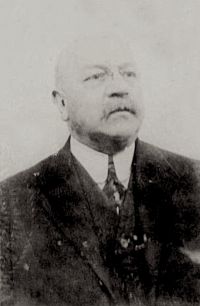
Portrait of John N. Luff John N. Luff,  What Philately Teaches

“ Watermarks are designs impressed in the paper pulp. The paper is slightly thinner in the lines of these designs and appears lighter when held to the light. Of course you are all familiar with this appearance from having noticed 50the watermarks in note paper. On rare occasions the watermark is a thickening of the paper instead of a thinning. In such a case the watermark appears more opaque than the paper. Watermarks in paper used for stamps are, of course, intended as a security against counterfeiting. ”
Source: Gutenberg

Sir Edward Denny Bacon,  Saint Vincent, with notes and publishers' prices

“ The design of the watermark was, however, such that it made no difference which end of the sheet was put first into the press, and it passes our comprehension to know how an inverted watermark could therefore be distinguished.
Although all the stars in St. Vincent stamps are of the same size, owing to the “bits” being hand-made they vary a little in shape, and we have seen faulty ones having one or more rays with the points broken or twisted out of their proper direction. Besides this there are two rather distinct varieties in the shape of the star. These exist side by side in the same sheet.
”
Source: Gutenberg

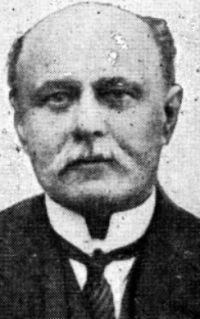
Portrait of Douglas Blackburn Douglas Blackburn,  The Detection of Forgery

“ The detection of this watermark fraud is simple and infallible. If the suspected document be moistened with lukewarm water the spurious watermark disappears immediately, but if genuine, it becomes plainer.
The worn and dingy appearance inseparable from age in a letter is accentuated by rubbing it lightly with a dirty duster. The effect is usually obvious under a strong glass, the passage of the dirty cloth revealing itself in minute parallel lines.
”
Source: Gutenberg

Get perspective with Kwize: daily news enlightened by great literature