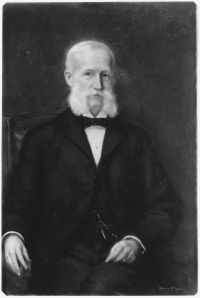
John W. Foster

John W. Foster

Summary

Portrait of John W. Foster John W. Foster American Diplomacy in the Orient (1903)

The various powers cast upon us looks of tiger-like voracity, hustling each other in their endeavors to be the first to seize upon our inmost territory. They think that China, having neither money nor troops, would never venture to go to war with them. They fail to understand, however, at there are some things which this empire can never consent to, and that, if hard pressed, we have no alternative but to rely upon the justice of our cause, the knowledge of which in our breasts strengthens our resolve and steels us to present a united front against our aggressors.
Source: Wikisource

Portrait of John W. Foster John W. Foster American Diplomacy in the Orient (1903)

The civilized world was horrified by the massacre of foreigners,—men, women, and helpless children,—the destruction of foreign-built railways and property, and finally by the news that one foreign minister had been murdered in a street of the capital, and that all the other diplomatic representatives were besieged in their legations and their lives threatened by a bloodthirsty mob which had overawed or was controlling the imperial government.
Source: Wikisource

Portrait of John W. Foster John W. Foster American Diplomacy in the Orient (1903)

Since the Japanese war and the recent easy march of the allied forces to Peking, the tendency has been to decry and scout the danger. But it is scarcely an exaggeration, in presence of its history and attainments, to assert that no nation or race of ancient or modern times has stronger claim than the Chinese to be called a great people. The fact that the United States has been compelled to violate its early traditions and much vaunted principles in the exclusion of the Chinese from competition with its own people is a high testimony to their race capacity and endurance.
Source: Wikisource

Get perspective with Kwize: daily news enlightened by great literature