Summary

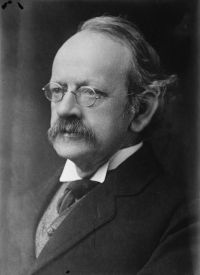
Portrait of Joseph John Thomson Joseph John Thomson Rays of Positive Electricity and Their Application to Chemical Analyses… (1913)

Wilsar gives the following table for the Döppler effect for some of the nitrogen lines:—
Thus the effect for the line 3995.2 is much less than for any of the others showing that the velocity of the source of this line is considerably less than that of the sources of the others. The different states in which nitrogen occurs in the positive rays are atoms with two charges, atoms with one charge, molecules with one charge, and in exceptional cases atoms with three charges and a tri-atomic molecule with one charge.
Source: Wikisource

Portrait of Joseph John Thomson Joseph John Thomson Rays of Positive Electricity and Their Application to Chemical Analyses… (1913)

It would seem as if the molecules must either give rise to a continuous spectrum or else to one in the infra red.
As the second spectrum of hydrogen is present when the positive rays pass through a gas, but does not show any displacement, it must arise from some process in which the moving particles do not take part, such for example as the combination of a positive atom with a negative one (not with a corpuscle) to form a neutral molecule.
Source: Wikisource

Portrait of Joseph John Thomson Joseph John Thomson Rays of Positive Electricity and Their Application to Chemical Analyses… (1913)

Thus to explain the maxima in the Doppler curve with displacements in this proportion it is not necessary to assume that the molecules give out the same spectrum as the atom. The occurrence of singly charged atoms of hydrogen with velocities in this proportion of to 1 might be accounted for in some such way as the following: the atoms with the larger velocity have been charged atoms during the whole of their career
Source: Wikisource

Get perspective with Kwize: daily news enlightened by great literature