Summary

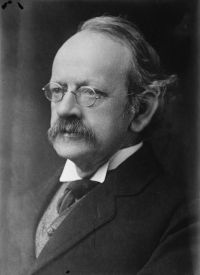
Portrait of Joseph John Thomson Joseph John Thomson Rays of Positive Electricity and Their Application to Chemical Analyses… (1913)

After continued exposure to the positive rays the brightness of the phosphorescence and ultimately disappears, so that for the detection of rays the willemite must be renewed from time to time. Some substances deteriorate more rapidly than others, for example zinc blende phosphoresces very brightly under the positive rays, but, as far as my experience goes, it deteriorates more quickly than willemite, so that when the observations have to last for any considerable time the willemite is preferable.
Source: Wikisource

Portrait of Joseph John Thomson Joseph John Thomson Rays of Positive Electricity and Their Application to Chemical Analyses… (1913)

A more sensitive, and for many purposes more convenient, way of registering the deflection of the positive rays is to take advantage of the fact that, when these rays strike against a photographic plate, they affect the plate at the place of impact and thus a permanent record of the position of the rays can be obtained.
Source: Wikisource

Portrait of Joseph John Thomson Joseph John Thomson Rays of Positive Electricity and Their Application to Chemical Analyses… (1913)

The positive rays gradually remove a thin deposit of metal from the part of walls of the tube against which they strike, Such thin deposits can readily be produced by running an electric discharge through the tube when it contains gas at a low pressure, using for the cathode a piece of the metal it is wished to deposit on the glass.
Source: Wikisource

Get perspective with Kwize: daily news enlightened by great literature