Summary

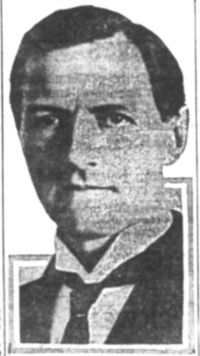
Portrait of Joseph Schafer Joseph Schafer The Yankee and the Teuton in Wisconsin (1922)

Loading a wagon with a plough, a bed, a barrel of salt meat, the indispensable supply of tea and molasses, a Bible and a wife, and with his axe on his shoulder, the Yankee sets out for the West, without a servant, without an assistant, often without a companion, to build himself a log hut, six hundred miles from his father's roof, and clear away a spot for a farm in the midst of the boundless forest.... He is incomparable as a pioneer, unequalled as a settler of the wilderness.
Source: Wikisource

Portrait of Joseph Schafer Joseph Schafer The Yankee and the Teuton in Wisconsin (1922)

To be sure, every important event creates its own legend or tradition, and such legends tend to be preserved and to be handed down from generation to generation. But legends are not history. No one worthy to rank as a careful historian would presume to write the history of the Great War on the basis of legends now crystallizing about it. No more can one write the history of the Revolution on such a legendary basis. This view, that much which once was thought to be history but was in fact mere legend, is not in any sense new.
Source: Wikisource

Portrait of Joseph Schafer Joseph Schafer The Yankee and the Teuton in Wisconsin (1922)

About the time that Yankees began to emigrate to Wisconsin a talented French writer, Michel Chevalier, gave the world a brilliant and on the whole favorable characterization of them. "The Yankee," he says, "is reserved, cautious, distrustful; he is thoughtful and pensive, but equable; his manners are without grace, modest but dignified, cold, and often unprepossessing; he is narrow in his ideas, but practical, and possessing the idea of the proper, he never rises to the grand. He has nothing chivalric about him and yet he is adventurous, and he loves a roving life.
Source: Wikisource

Get perspective with Kwize: daily news enlightened by great literature