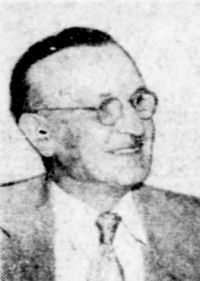
Jozef Žák-Marušiak

Jozef Žák-Marušiak

Summary

Portrait of Jozef Žák-Marušiak Jozef Žák-Marušiak The Czechoslovak Review (1918)

The Slovak nation looks into the future with open eyes; it knows that it will enter into the new world with all its rights. The Slovak nation does not recognize the right of the Budapest parliament to speak in the name of the Slovak people. All decisions taken there concerning the Slovaks are declared by the National Council in the name of the Slovak people to be null and void. We demand the right of self-determination for all the Slav nations of Hungary, for the Rusins, for the Serbians who have no representatives in this parliament, as well as for the Magyars and Germans of Hungary.
Source: Wikisource

Portrait of Jozef Žák-Marušiak Jozef Žák-Marušiak The Czechoslovak Review (1919)

To look at Úprka’s canvas is to look through a window into the Slovak heaven; his colors full of bold contrasts, shimmer in sunshine and shout with joy, even though the motive be a most simple one. His art aims at one thing only—to register on canvas what he sees around him, people at work, at their pleasures, in church, in the field. But everything he sees with a great master’s eye and so all his work is true, delicious art. Always he paints his own Slovak people and above all children, whom he loves.
Source: Wikisource

Portrait of Jozef Žák-Marušiak Jozef Žák-Marušiak The Czechoslovak Review (1918)

It is not likely that the Allies will swallow the Magyar peace bait and abandon the Czechoslovaks with their brave army for the sake of gaining over a few insincere Magyar noblemen. But it is well to realize that the Magyars have no desire to be just to the nationalities of Hungary.
The Budapest Government is still so blind as to imagine that they can hide the desires of the majority of the Hungarian inhabitants for a break-up of Hungary, and that they can accomplish this by suppressing the nationalities themselves.
Source: Wikisource

Get perspective with Kwize: daily news enlightened by great literature