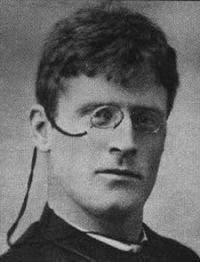
“ These, then, are the steps of Hamsun’s progress as an author, from the passionate chaos of Sult to the Miltonic, monumental calm of Growth of the Soil. The stages in themselves are full of beauty; the wistfulness of Pan and Victoria, the kindly humour of Sværmere and Benoni, the autumn-tinted resignation of the Wanderer with the Mute—they follow as the seasons do, each with a charm of its own, yet all deriving from one source. His muse at first is Iselin, the embodiment of adolescent longing, the dream of those “whom delight flies because they give her chase.” ”
Summary
“Mothwise”, is a work by Knut Hamsun. It explores elements such as Rolandsen, Mack and Enok.
Quotes from Mothwise (Knut Hamsun)
“ Young folk walked the roads by night, singing and waving branches of willow. And from [58] every rocky islet came the calling of birds—of loon and gull and eider-duck. And the seal thrust up its dripping head from the water, looked round, and dived again down to its own world below. Ove Rolandsen too felt the spell; now and again he could be heard singing or strumming in his room of nights, and that was more than need be looked for from a man who was no longer a youth. ”
“ This is the Hamsun of Pan. But Hamsun now is a greater soul than in the days when Glahn, the solitary dweller in the woods, picked up a broken twig from the ground and held it lovingly, because it looked poor and forsaken; or thanked the hillock of stone outside his hut because it stood there faithfully, as a friend that waited his return. He is stronger now, but no less delicate; he loves not Nature less, but the world more. He has learned to love his fellow-men. ”
“ The men drop the things they are holding, slip on their Sunday jackets with all speed, and hasten down to the waterside to help, if needed. That made ten in all to welcome the new arrivals.“Goddag!” says the chaplain from the stern, smiling a little, and doffing his soft hat. All those on shore bare their heads respectfully, and the lay-helpers bow till their long hair falls over their eyes. Big Rolandsen is less obsequious than the others; he stands upright as ever, but takes off his hat and holds it low down. ”
“ He could never leave her in peace, but was always worrying the life out of her with his lack of sense. And so they drifted once more into one of the foolish, fruitless quarrels that had been repeated at intervals through the past four years. The priest had come up in all humility to beg his wife’s indulgence because he could not get her the new shoes at once, but he found it now more and more impossible to carry out his purpose; bitterness overpowered him. Things were all wrong every way at the Vicarage since Jomfru van Loos had left them and his wife had taken over the housekeeping herself. ”
“ There is quite sufficient of the erratic and unusual in the character of Glahn, the hero, but the tone is more subdued. The madcap youth of genius has realised that the world looks frigidly at its vagaries, and the secretly proud “au moins je suis autre”—more a boast than a confession—gives place to a wistful, apologetic admission of the difference as a fault. ”
“ Elise went back to town.And everything went on as usual, as if one could do without her well enough. But it was this way now with Rolandsen: from the time he had entered into partnership with Mack, he had promised himself to do good work and not waste time in dreaming of other things. Dreams and fancies for the summer-time—and then best to stop. But some go dreaming all their lives; go fluttering mothwise all their lives, and never can make an end. Now here was Jomfru van Loos in Bergen. ”
“ Rolandsen felt he had abased himself; she would not think of him now as the lordly man he was. He must raise himself once more in her esteem. It would never do to show himself so utterly defeated. So he began talking of death, and was highly humorous about it; now he would have to die, and he didn’t care much if he did. But he had his own ideas about the funeral. He would make a bell himself to ring his knell, and the clapper should be fashioned from the thighbone of an ox, because he had been such a fool in life. ”
“ It has been said that life is a comedy to those who think, a tragedy to those who feel. Humanly speaking, it is one of the greatest merits of Hamsun’s works that he shows otherwise. His attitude towards life [xxi] is throughout one of feeling, yet he makes of life no tragedy, but a beautiful story.“I will be young until I die,” says Kareno in Aftenrøde. The words are not so much a challenge to fate as a denial of fact; he is not fighting, only refusing to acknowledge the power that is already hard upon him. ”
“ The fisherman is a gambler. He lays out his nets or his lines, and waits for the haul; he casts his seine and leaves the rest to fate. Often he meets with only loss and loss again, his gear is carried out to sea, or sunk, or ruined by storms, but he furnishes himself anew and tries again. Sometimes he ventures farther off, to some grounds where he has heard of others finding luck, rowing and toiling for weeks over stubborn seas, only to find he has come too late; the fishing is at an end. But now and again the prize may lie waiting for him on his way, and stop him and fill his boat with money. ”
“ It is not infrequent in literature to find the wisest and most poignant utterances thus laid in the mouths of poor men clad in motley. Some of the most daring things in Shakespeare, the newest heresies of the Renaissance, are voiced by irresponsibles. Of all dramatic figures, that of the fool is most suited to the expression of concentrated feeling. There is an arresting question in a play of recent years, which runs something like this: “Do you think that the things people make fools of themselves about are any less real and true than the things they behave sensibly about?” ”
“ That sort of man was the priest; strong and stiff and just in his dealings with all. And he had reason now to mortify himself without pity. The constant discomfort at home and the many difficulties of his office were striving to demoralise him and tempt him to his fall; reprehensible thoughts came into his head at times. Why, for instance, should he not make peace with Levion, who could be useful to him in many little matters by way of return? Furthermore, Mack of Rosengaard had offered his help in any deserving case of actual need. ”
“ Five years after Victoria, Hamsun gives us the romantic drama of Munken Vendt, in which Diderik and Iselin appear.Throughout these early works, Hamsun is striving to find expression for his own sensitive personality; a form and degree of expression sufficient to relieve his own tension of feeling, without fusing the medium; adequate to his own needs, yet understandable and tolerable to ordinary human beings, to the readers of books. The process, in effect, is simply this: Hamsun is a poet, with a poet’s deep and unusual feeling, and a poet’s need of utterance. ”
“ Kareno is an intellectual character. He is a philosopher, a man whose perceptions and activity lie predominantly in the sphere of thought, not of feeling. His attempt to carry the fire of youth beyond the grave of youth ends in disaster; an unnecessary débâcle due to his gratuitously attempting the impossible.Hamsun’s poet-personality, the spirit we have seen striving for expression through the figures of Nagel, Glahn, Johannes, and the rest, is a creature of feeling. ”
“ But now came Big Rolandsen up along the road, walking with a soft, gliding step, and his eyes staring stiffly. He was on his usual round. He greeted the Lensmand, and stopped.“Here’s Rolandsen,” cried Ulrik. “Ho, boys, look at him!”“He’s dangerous,” said the Lensmand. “He’s drawn blood from one already. We shall have to rope him.”“Rope him?”The Lensmand nodded. “Yes. I won’t stand any more of this.”“Nonsense,” said Rolandsen. “What do you want with a rope? You leave me to tackle him.”Ulrik stepped closer, made pretence to lift his hand in greeting, and gave Rolandsen a slight blow. ”
“ He turned, and strode defiantly back across the clearing, tramping over dry twigs as loudly as he pleased.Coming down on to the road again, he saw the ladies still seated in the same place. They were talking, and Elise was digging at the ground with the point of her parasol. Rolandsen halted again. Your dare-devil sort are ever the most cautious. “But I’m a thief,” he said to himself. “How can I have the face to show myself? If I give a greeting, it will be forcing them to recognise me.” ”
“ There was grass in the meadows now, and the woods were in leaf; the nights were mild and calm. The bay was deserted, all the fishing-boats were gone, and Mack’s own vessels had sailed away to the southward with their cargoes of herring. It was summer.The fine days gave good attendance at the church on Sundays; crowds of people came by land and water, and among them a few skippers from Bergen and Haugesund, who had their craft out along the coast, drying split fish on the rocks. They came again year after year, and grew old in the place. ”
“ And with all his chivalrous sacrifice and violent end, Glahn is at best a quixotic hero. Men, as men, would think him rather a fool, and women, as women, might flush at the thought of a cavalier so embarrassingly unrestrained. ”
“ Growth of the Soil is very far indeed from Hamsun’s earliest beginnings: far even from the books of his early middle period, which made his name. It is the life story of a man in the wilds, the genesis and gradual development of a homestead, the unit of humanity, in the untilled, uncleared tracts that still remain in the Norwegian Highlands. It is an epic of earth ”
“ Most of us have at some time or another felt that uncomfortable, almost indecently denuding question which comes to us at rare moments from the stage where some great drama is being played: What is higher, what is more real: this, or the life we live? ”
“ Their sensitiveness is a thing we have been trained, for self-defence, to repress. It is well for us, no doubt, that this is so. But we are grateful for their showing that such things are, we feel the richer for a momentary glimpse of that susceptibility we dare not encourage in ourselves. The figures Hamsun sets before us as confessedly unsuited to the realities of life, his vagabonds, his failures, his fools, have power at times to make us question whether our world of comfort, luxury, success, is what we thought ”
“ Four-and-thirty was Rolandsen now, a student, and a bachelor; he played the guitar, trolled out the local songs with a deep voice, and laughed till the tears flowed at all the touching parts. That was his lordly way. He was in charge of the telegraph station, and had been here now for ten years in the same place. A tall fellow, powerfully built, and ready enough to lend a hand in a brawl.Suddenly young Ferdinand gives a start. From his attic window he catches sight of Trader Mack’s white houseboat hurrying round the point ”
“ Victoria is the swan-song of Hamsun’s subjective period. Already, in the three plays which appeared during the years immediately following Pan, he faces the merciless law of change; the unrelenting “forward” which means leaving loved things behind. Kareno, student of life, begins his career in resolute opposition to the old men, the established authorities who stand for compromise and resignation. For twenty [xvii] years he remains obstinately faithful to his creed, that the old men must step aside or be thrust aside, to make way for the youth that will be served. ”
“ Rolandsen, the telegraph operator in love with Elise Mack, is no poet; he has not even any pretensions to education or social standing. He is a cheerful, riotous “blade,” who sports with the girls of the village, gets drunk at times, and serenades the parson’s wife at night with his guitar. [xxiii] Sværmere is the slightest of little stories in itself, but full of delightful vagaries and the most winning humour. It is the first of Hamsun’s stories with a happy ending. ”
“ Nagel, the exasperating irresponsible of Mysterier, is at his maddest in his behaviour towards the woman he loves. It is natural that this should be so. When a man is intoxicated, his essential qualities are emphasised. If he have wit, he will be witty; if a brutal nature, he will be a brute; if he be of a melancholy temper, he will be disposed to sit upon the ground and tell sad stories of the death of kings.We see this in Pan. The love-making of the hero is characterised by the same irrational impulses, the same extravagant actions, as in Sult and Mysterier. ”
“ Then the younger man put in a word, and this was that Børre the organ-blower wanted his boat and gear.Rolandsen shouted bitterly at that. “Børre! Is the fellow mad? And what about me then? Here am I living on a desert island; I must have a boat to get to folk, and gear to fish with, if I’m not to starve. Tell him that from me!”“And then there was a word from the new man at the station, how there’s telegrams waiting for you there. Important.” ”
“ He is strangely little of a seaman by nature, a cautious and reliable youth, doing just as much of this thing and that as is needed in his daily life. He takes after his mother, and is not altogether the true Mack type. But that is well for one who would get on in the world and succeed; never do too much, but rather a little too little of everything, so it could be reckoned as just enough. Look at Rolandsen, for instance, that extravagant madcap with his wild fancies. A common thief among his fellows, that was what he had come to, and lost his position into the bargain. ”
“ And there he was, going about with a burdened conscience, wearing his clothes down thinner and thinner, and never so much as a room of his own to live in, saving a bit of a bedroom at Børre the organ-blower’s, and that was humble enough. That was the end of Ove Rolandsen. Børre [125] might be an excellent man in his way, but he was the poorest in the place, and had least herring in his store. And seeing his daughter Pernille was a poor, weakly creature, the organ-blower’s house was never reckoned for much. It was not the place a man of any decent position could choose to live in. ”
“ Here was the priest coming up, and he, no doubt, could hear the two in dispute—but what did Levion care for him now?The boat lay to, and those on board rushed up with axe and pick. The priest gave a brief greeting and a hasty word. “These midsummer bonfires are dangerous, Enok; the sparks fly about all over the place. ”
Common terms
Similar works
Wanderers (Knut Hamsun)Pan (Knut Hamsun)The Captain's Bunk (M. B. Manwell…Take It from Dad (George Griswold Livermore…The Marvellous Adventures and Rare Conceits of Master Tyll OwlglassFlip's "Islands of Providence"…The outcast (Selma Lagerlöf)The little acrobat: a story of Italy…Chambers's journal of popular literature…Knut Hamsun (Hanna Astrup Larsen…
