“ While they are determined not much longer to lie prostrate beneath England’s feet, they would gladly stand by her side, arm in arm with her, firmly united for great ends of mutual welfare and mutual strength. An Anglo-Indian Empire is one of the splendid possibilities of the future, binding Britain and her colonies and her great Asiatic possession together into a powerful world-spanning federation of free peoples. Something like this is the dream of India’s greatest leaders, as it is also the dream of not a few of Britain’s most far-seeing minds. ”
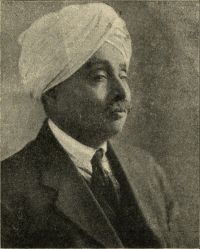
Lala Lajpat Rai
Summary
"Young India," authored by Lala Lajpat Rai, is a seminal text of early 20th-century Indian nationalism, published during the height of anti-colonial resistance against British rule. Written as a manifesto for self-determination, it promotes self-rule, critiques foreign control, and highlights the moral and intellectual ability of Indians to govern themselves. Rai’s work combines themes of patriotism, education, and non-cooperation, advocating for Swadeshi and Swaraj as routes to freedom.
Through passionate rhetoric, he challenges British dominance, asserting that suppression only strengthens nationalist determination, while envisioning a future Anglo-Indian alliance based on shared strength. The text reflects the tensions between moderate and radical groups within the nationalist movement, framing India’s struggle as both an ethical duty and a practical need for advancement.
Quotes from Young India (Lala Lajpat Rai)
Lala Lajpat Rai,
Young India
(1916)
“ If England were obliged, as was Imperial Rome in her day, to abandon India in the hour of some great danger, what could be more humiliating to England and to India alike, than for India to be left unarmed and untrained in the use of arms, as her civil population now is, a prey to internal anarchy and external aggression? What a commentary would it be, on 150 years of British rule in India, that England found the people strong though disunited and left them helpless and emasculated? ”
“ The truth is, the safest Government in the world for every people of any intellectual and moral development at all (and India is advanced, both intellectually and morally) is self-government. No rule so completely destroys the fibre of a nation as rule by a foreign power. India can rule herself far better than any foreign nation can rule her.If India is incapable of self-government today, what an indictment is that against England! She was not thus incapable before England came. Has one hundred and fifty years of British tutelage produced such deterioration? ”
