Summary

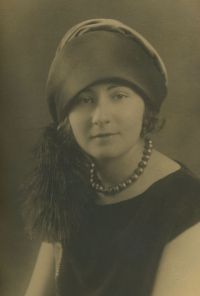
Portrait of Lillian Eichler Lillian Eichler Book of Etiquette, Volume 2, Part 4… (1921)

Now let us stand for a moment on a comer of Fifth Avenue, New York's famous avenue of fashion. We see a modern young woman on her way to the theater. From the tips of her French-heeled slippers to the jaunty little hat on her head, she is—perfect. Her gown seems to express in every line the story of her own personality. The color-scheme might well have been invented by Mother Nature herself. The wrap she wears is of sable furs—but how different from the furs of her sister of ancient days! Each skin is exquisitely glossed and dressed, and the whole matched to perfection.
Source: Wikisource

Portrait of Lillian Eichler Lillian Eichler Book of Etiquette, Volume 2, Part 4… (1921)

We know by glancing at a young man who wears an orange tie, checked hat, and twirls a bamboo cane, that he is inclined to be just the least bit gay. We know by the simple dignity of an elderly woman's dress that she is conservative and well-poised.
In the clothes we wear we reveal to the world the story of our ideals, our principles. If we are frivolous, our clothes show it. If we have a sense of the artistic, our clothes show it. If we are modest, bold, vain or proud the clothes we wear reveal it for all the world to see.
Source: Wikisource

Portrait of Lillian Eichler Lillian Eichler Book of Etiquette, Volume 2, Part 4… (1921)

Every woman has within her the possibilities of being charming—if not beautiful. It requires only the knowledge of correct dress, of harmony and beauty in costume. There is, of course, the woman who insists that she does not care at all about clothes, that she does not care how she is dressed. But she is the exception, and we are interested in the rule. Woman does herself an injustice by being dowdy, careless or commonplace in dress. She puts herself at an unfair disadvantage. Charm and beauty are the heritage of woman, and the world expects it of her.
Source: Wikisource

Get perspective with Kwize: daily news enlightened by great literature