“ As the moon was shining straight into his face, I could see that the latter was as livid as that of a corpse, and had its brows drawn down over its narrow, insignificant eyes. Beside him, and close to my head, there was lying stretched on the top of the coil of rope a broad-shouldered peasant in a short smock and a pair of patched boots of white felt. The ringlets of the wearer's curly beard were thrust upwards, and his hands clasped behind his head, and with ox-like eyes he stared at the zenith where a few stars were shining, and the moon was beginning to sink. ”
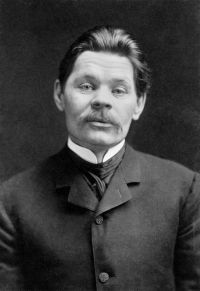
Maksim Gorky
Summary
Maksim Gorky’s Through Russia is a collection of vignettes and stories that examine the lives of ordinary Russians, especially peasants and rural workers.
Through vivid depictions of settings such as huts, streams, and cottages, and characters like Gubin, Ossip, and Nilushka, the work explores themes of folk endurance, existential challenges, and the severe conditions of peasant life. Gorky’s portrayal captures the persistent spirit of the Russian people in the face of hardship, combining poetic observation with social commentary.
Quotes from Through Russia (Maksim Gorky)
“ The woman's companion, some five or six years her senior, has a face exceptional in the constant change and movement of its great dark eyes as at one moment they withdraw themselves from the street of the Cossack hamlet, to gaze fixedly and gravely towards the steppe where it lies scoured with the scudding breeze, and at another moment fall to scanning the faces of the persons around her, and, at another, frown anxiously, or send a smile flitting across her comely lips as she bends her head, until her features are concealed. ”
“ And though the chorus failed altogether to dull the splashing of the rivulet and the babbling of the by-cut over a bed of stones, it seemed out of place in this particular spot; it aroused resentment against men who could not think of a lay more atune with the particular living, breathing objects around us. Gradually darkness enveloped the defile until only over the mouth of the pass, over the spot where, gleaming a brilliant blue, the rivulet escaped into a cleft that was overhung with a mist of a deeper shade, was there not yet suspended the curtain of the Southern night. ”
