“ Yet—and it is one of the most curious and touching things one sees—the peasant life goes on but little changed. Old men dig in their gardens, women gather and sell their vegetables, girls stand in the evenings at their cottage doors, children run about and play in the streets. ”
Peasant life
Definition and stakes
The theme of “peasant life” has been addressed by authors such as Ernest Belfort Bax, Donald Mackenzie Wallace, Leo Tolstoy, Jacob Grimm and A. Mary F. Robinson. It is often associated with terms like land, labor, bread, agriculture and grain.
Quotes about “peasant life”
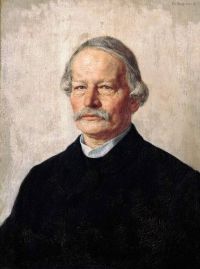 Gustav Freytag,
Pictures of German Life in the XVIIIth and XIXth Centuries…
Gustav Freytag,
Pictures of German Life in the XVIIIth and XIXth Centuries…
“ The thriving peasant lived on his farm; the young people gambolled about, blythesome and fond of enjoyment, on the village green and in the lanes; the countryman passed through life in the calm consciousness of strength, the preserver of old customs, in contradistinction to the nobleman, with his new-fangled modes, who adorned himself with foreign discourse and language, and with great pretentions set up distinguished court usages in opposition to country manners. ”
 Miles Franklin,
My Brilliant Career — Chapter V
(1901)
Miles Franklin,
My Brilliant Career — Chapter V
(1901)
“ I say naught against the lower life. The peasantry are the bulwarks of every nation. The life of a peasant is, to a peasant who is a peasant with a peasant's soul, when times are good and when seasons smile, a grand life. ”
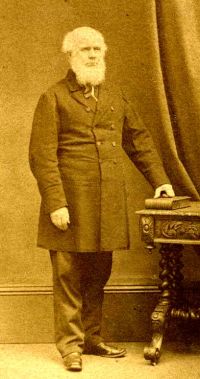 William Howitt,
Woodburn Grange: A story of English country life…
(1867)
William Howitt,
Woodburn Grange: A story of English country life…
(1867)
“ The peasant, returning home at this hour along some solitary vale, sees a picture such as no so-called immortal master ever accomplished, such as no king’s house can boast. Yet we feel no wonder; we utter no praise. ”
 Will Levington Comfort,
The Hive
Will Levington Comfort,
The Hive
“ But you have to look back to see how sweet the purity and simplicity of the peasant's life. The peasants themselves do not know. To-day holy hot sunlight and lilac bloom—could there be a more wonderful day than that? ”
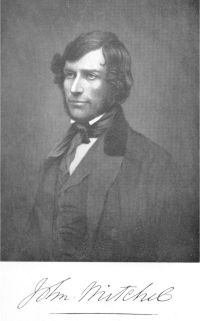 John Mitchel,
To the Small Farmers of Ireland
John Mitchel,
To the Small Farmers of Ireland
“ In the meantime, it appears plain, from all authorities, that there is a ‘surplus’ either of the one class or the other;—you, the million, seem pitted in deadly straggle against them, the eight thousand; and either you or they, it is feared, must die.But it is a great truth, ‘that the Life of one peasant is as precious as the Life of one nobleman or gentleman. ”
Will Levington Comfort,
The Hive
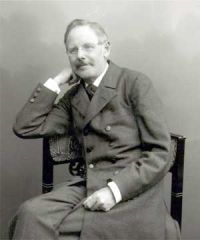
“ The call that would come to the peasant would be to the Town—to many men and things, for that is just the opposite from his life. In a simple way he would go to the depths of the worst he could find—to the extreme. ”
 Peter Rosegger,
The Forest Farm: Tales of the Austrian Tyrol
Peter Rosegger,
The Forest Farm: Tales of the Austrian Tyrol
“ The things which, in the towns, are produced by the divided toil of thousands of heads, hands, and wheels, in other words, the necessaries of life, the peasant in the far-lying mountains must make for himself, in his narrow circle, with his small, unaided means. He is a provider of natural produce, manufacturer, middleman and consumer, all in one. The bread which he eats comes from the corn which he flung into the earth last year with his own hand; the bacon which he enjoys on its bed of cabbage is cut from the pig fattened with the turnips which he has planted in his own ground. ”
 Lady Morgan,
The Wild Irish Girl: A National Tale
Lady Morgan,
The Wild Irish Girl: A National Tale
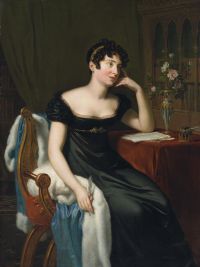
“ Here, both the labourer and his hire rise in the scale of political consideration; here more hands are called for than can be procured; and the peasant, stimulated to exertions by the reward it reaps for him, enjoys the fruits of his industry, and acquires a relish for the comforts and conveniences of life. ”
John Forbes, Transactions of the Provincial Medical and Surgical Association (1834)
“ Generally speaking the common peasantry or agricultural labourers, are as heavy, dull, and unintellectual, as in any part of England, while the miners, the common labouring miners, are singularly acute and intelligent. The causes of this difference are sufficiently obvious, and lie in the nature of the avocations of the respective parties. The peasant, from youth to age, plods round the same dull circumscribed circle of occupation; and his business being fully learnt in early life, makes no great demand on the maturer powers of succeeding years ”
 Elizabeth Butler,
From sketch-book and diary
Elizabeth Butler,
From sketch-book and diary
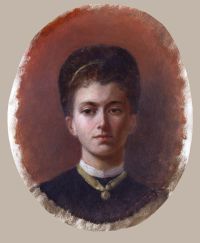
“ The peasant is the most honourable, religious, and philosophical of mankind. I feel always safe with peasants and like their conversation and ways. They lead the natural life. Before daylight, in midsummer, one heard them directing their oxen at the plough, and after the mid-day siesta they were back at their work till the Ave Maria. It was a large family that inhabited the peasant quarters of our villa and worked the landlord’s vineyards. ”
William Emerton Heitland, Agricola (1921)
“ Now here we have a picture of the free farmer on a small scale, who lives in a hovel and depends on the labour of his own hands. He is the ancient analogue of the French peasant, who works harder than any slave, and whose views are apt to be limited by the circumstances of his daily life. ”
 Henry Charles Carey,
The Slave Trade, Domestic and Foreign
Henry Charles Carey,
The Slave Trade, Domestic and Foreign
“ In short, the life of a peasant in those countries where the land is not kept from subdividing by the laws is one of the highest moral education. His unfettered position stimulates him to better his condition, to economize, to be industrious, to husband his powers, to acquire moral habits, to use foresight, to gain knowledge about agriculture, and to give his children a good education, so that they may improve the patrimony and social position he will bequeath to them."—Vol. ”
 Margaret Fuller,
Life Without and Life Within; or…
Margaret Fuller,
Life Without and Life Within; or…
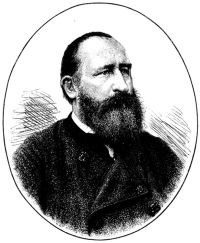
“ The peasant in his wooden shoes is welcomed in the gorgeous churches of Notre Dame and the Madeleine; and even in England, where political and social distinctions are more rigorously enforced than in any other country on earth, the lord and the peasant, the richest and the poorest, are usually occupants of the same church, and partakers of the same communion. ”
 Alfred Edmund Brehm,
From North Pole to Equator: Studies of Wild Life and Scenes in Many Lands
(1896)
Alfred Edmund Brehm,
From North Pole to Equator: Studies of Wild Life and Scenes in Many Lands
(1896)
“ When the peasant, who in any case works only when he must, can only get about one shilling and twopence for about two hundredweights of grain, the flail becomes too heavy in [Pg 522] his hand, and the harvest, according to his limited ideas, becomes a curse. ”
 Donald Mackenzie Wallace,
Russia
Donald Mackenzie Wallace,
Russia
“ They had expected that the Emancipation would produce instantaneously a wonderful improvement in the life and character of the rural population, and that the peasant would become at once a sober, industrious, model agriculturist. ”
Donald Mackenzie Wallace,
Russia
“ Besides this, from the economic point of view village life has been completely revolutionised. Formerly the members of a peasant family obtained from their ordinary domestic resources nearly all they required. ”
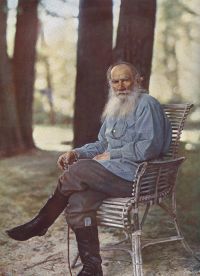 Leo Tolstoy,
Twenty-three Tales
(1906)
Leo Tolstoy,
Twenty-three Tales
(1906)
“ The younger sister was piqued, and in turn disparaged the life of a tradesman, and stood up for that of a peasant. 'I would not change my way of life for yours,' said she. 'We may live roughly, but at least we are free from anxiety. You live in better style than we do, but though you often earn more than you need, you are very likely to lose all you have. You know the proverb, "Loss and gain are brothers twain." It often happens that people who are wealthy one day are begging their bread the next. Our way is safer. Though a peasant's life is not a fat one, it is a long one. ”
Henry Charles Carey,
The Slave Trade, Domestic and Foreign
“ The peasant who, with his family, does all the work on his little inheritance, who neither pays rent to any one above him, nor wages to any one below him, who regulates his production by his consumption, who eats his own corn, drinks his own wine, and is clothed with his own flax and wool, cares little about knowing the price of the market ”
Elijah Kellogg, The Young Deliverers of Pleasant Cove
“ When, amid all these impositions, the peasant has raised his grain, he can't have a hand-mill to grind it in. He must grind in the mill of the lord, bake his bread in the oven, and press his grapes and olives in the press of his master, and pay for the privilege, and, if unmarried, was subject to conscription ”
Mary Wollstonecraft Shelley, The Last Man (1826)
“ The free and happy peasant, unshackled by the Austrian, bears the double harvest to the garner; and the refined citizens rear without dread the long blighted tree of knowledge in this garden of the world. ”
Edward Harrison Barker, Wanderings by Southern Waters, Eastern Aquitaine
“ It must be very hard to ask for work from farm to farm. I can enter fully into the attachment of the French peasant to his bit of land, which, although it may yield him little more than his black bread, cannot be taken from him so long as he can manage to live by the sweat of his brow. ”
 Matilda Betham-Edwards,
In the Heart of the Vosges and Other Sketches by a "Devious Traveller"
Matilda Betham-Edwards,
In the Heart of the Vosges and Other Sketches by a "Devious Traveller"
“ The first showed us peasant property in its simplest development, a little family contentedly living on their bit of land, making its produce suffice for daily needs, independent of marts and markets as the members of a primitive community. ”
Peter Rosegger,
The Forest Farm: Tales of the Austrian Tyrol
“ But nowadays this, like most things, is changing; and, since gold and silver have taken to rolling to and fro, in such a momentous fashion, between the houses of town and country, the peasant no longer has the same joy in his farm, where he must always be labouring for others. ”
 George Gissing,
The Private Papers of Henry Ryecroft
George Gissing,
The Private Papers of Henry Ryecroft
“ If your peasant love the fields which give him bread, he will not think it hard to labour in them; his toil will no longer be as that of the beast, but upward-looking and touched with a light from other than the visible heavens. No use to blink the hard and dull features of rustic existence; let them rather be insisted upon, that those who own and derive profit from the land may be constant in human care for the lives which make it fruitful. ”
Frederick Arthur Neale, Once a Week (1862)
“ Every day, just at the close of evening, the peasant loads the day’s produce upon horses, mules, asses, and even oxen, and conveys them in safety to the proprietor’s house on the estate: returning with his beasts of burthen in time for a good night’s rest, to brace him up against to-morrow’s labours. ”
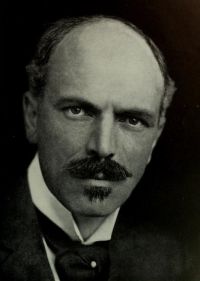 Maurice Hewlett,
In a Green Shade: A Country Commentary
Maurice Hewlett,
In a Green Shade: A Country Commentary
“ The peasant now has his foot on the degrees of the throne, and has only to step up, he and his mates of the mine, the forge, the foundry and the railroad—to step up and lay hand to the orb and sceptre. ”
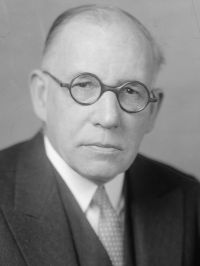 Carlton J. H. Hayes,
A Political and Social History of Modern Europe V.1
Carlton J. H. Hayes,
A Political and Social History of Modern Europe V.1
“ The individual peasant, moreover, was bound by custom to cultivate his land precisely as his ancestors had done, without attempting to introduce improvements. He grew the same crops as his neighbors—usually wheat or rye in one field ”
Various, Harper's New Monthly Magazine, Vol…
“ The poor peasant, with his merely animal wife and animal daughter, toiled in the ditch and in the field, through joyless years, while his king, beneath gilded ceilings, was feasting thousands of nobles, with the luxuries of all climes, from plate of gold. ”
 John R. Wise,
The New Forest: Its History and Its Scenery
John R. Wise,
The New Forest: Its History and Its Scenery
“ Not only this, but the barrows on the plains are named after the fairies, and the peasant imagines, like the treasure-seekers of the Middle-Ages, that they contain untold wealth, and that the Forest wells are full of gold. [217] I do not mean, however, to say that these beliefs are openly 178 avowed, or will even be acknowledged by the first labourer who may be seen. The English peasant is at all times excessively chary—no one perhaps more so—of expressing his full mind; and a long time is required before a stranger can, if ever, gain his confidence. ”
R. V. Russell, The Tribes and Castes of the Central Provinces of India…
“ And one can well understand how the peasant, winning a scanty subsistence from his poor fields near the forest, and seeing his harvest destroyed in a night by the trampling of a herd of these great brutes against whom his puny weapons were powerless, looked on them as terrible and malignant deities. ”
Nevill Forbes, The Balkans: A History of Bulgaria…
“ The peasant’s holding in arable land being small, he not infrequently ploughed his pasture, and, as a consequence, had either to give up keeping beasts, or pay a high price to the land-owners for pasturage. ”
 Jacob Grimm,
Grimms' Fairy Tales
Jacob Grimm,
Grimms' Fairy Tales
“ There was a certain village wherein no one lived but really rich peasants, and just one poor one, whom they called the little peasant. He had not even so much as a cow, and still less money to buy one, and yet he and his wife did so wish to have one. ”
Mary A. M. Marks, Landholding in England (1908)
“ If the serf tilled the soil for his lord, he tilled it also for himself. He had deep roots in the soil, whereas the whole tendency of modern social policy is to uproot him from the soil, with the result of leaving him no place, and sometimes a doubtful right to exist; to call him a peasant is to confuse the meaning of words. ”
Various, Blackwood's Edinburgh Magazine - Volume 57…
“ But where the unfortunate peasant is liable to see his whole crop carried off the land at the pleasure of one of the public officers, or the land itself torn from him, or himself or his son carried off by the conscription, how can we be surprised if he should think it not worth the while to trouble his head or his hands about any thing? Give him security, and he will work; give him property, and he will keep it; and give him the power of enjoying his gains in defiance of the tax-gatherer, and he will exhibit the manliness and perseverance which Providence has given to all. ”
Various, Graham's Magazine, Vol. XXXVI, No…
“ Well might Peace love such a dwelling-place. Here the peasant had lived for years in the enjoyment of that quiet contentment which only peasants know. Every year he had reaped his unblighted grain, and gathered his purple grapes. No cruel wolf entered his sheep-fold, no disease carried off his cattle. For the fairies of the valley delighted to protect him, and would only do him good. Often would they come by moonlight, and play their merry pranks near the cottage, and he would wake and lie listening to their joyous shouts, blessing them in his heart. ”
graf Leo Tolstoy, Fruits of Culture
“ VASÍLY LEONÍDITCH. Then you should not be so stingy, you know. Just let me tell you how necessary land is to peasants! Eh, what? It's very necessary, isn't it?141 FIRST PEASANT. That's just it. The land appears as the very first and foremost necessity to a peasant. That's just it.VASÍLY LEONÍDITCH. Then why be so stingy? Just you think what land is! Why, one can sow wheat on it in rows! I tell you, you could get eighty bushels of wheat, at a rouble and a half a bushel—that would be 120 roubles. Eh, what? Or else mint! I tell you, you could collar 400 roubles off an acre by sowing mint! ”
 George Park Fisher,
Outlines of Universal History, Designed as a Text-book and for Private Reading
George Park Fisher,
Outlines of Universal History, Designed as a Text-book and for Private Reading
“ THE PEASANTS.—Nearly two-thirds of the land in France was in the hands of the nobles and of the clergy. A great part of it was ill cultivated by its indolent owners. The nobles preferred the gayeties of Paris to a residence on their estates. There were many small land-owners, but many had individually too little land to furnish them with subsistence. The treatment of the peasant was often such that when he "looked upon the towers of his lord's castle, the dearest wish of his heart was to burn it down, with all its registers of debt." ”
 Sabine Baring-Gould,
A Book of the Cevennes
(1907)
Sabine Baring-Gould,
A Book of the Cevennes
(1907)
“ It is economy that drives the peasants to live in the drying-houses. As they are forced to light fires for the chestnuts, they extinguish those on their hearths in the farm-houses. Why have two fires going when one will suffice? So the peasant bids his wife and children cook their soup at the brazier in the séchoir. And he himself, driven under shelter by the rain and cold, brings to the common hearth his hatchet and long strips of wild chestnut, of which he fashions hoops for barrels or baskets for the collectors of olives. ”
Sixty Folk-Tales from Exclusively Slavonic Sources
“ If you have no riches, if you have no wife, I will give you all.” The peasant said: “Very good, mother, if you make me richer than any of the peasants. But I have no pony, no cow, and my cottage is wretched.” The lime-tree said: “Go home; all shall be yours.” The peasant went. A new house was his: fences of stout boards, horses that were ready to fly, and store-rooms full of corn. The cottager was not satisfied, because his wife was not handsomer. What was to be done? “I’ll go off quick to Mother Lime-tree.” He took his axe, and went off into the wood. ”
Bertha Thomas, George Sand (1889)
“ Those suffered most perhaps who, like herself, had to wait in enforced inaction, amid the awful dead calm that reigned in the provinces, yet forbidden to forget their affliction for a moment. The peasant was gone from the land—only the old and infirm were left to look after the flocks, to till and sow the field. ”
 Karolina Světlá,
Maria Felicia
(1898)
Karolina Světlá,
Maria Felicia
(1898)
“ What the lord thus buys for a little sum from his vassal, he takes to his storehouse, and when food becomes scarce he sells it back—again at his own price—to the poor man from whom he bought it. Oh, do not try to make me believe you do not know that during years of plenty just the opposite takes place—that the peasant must buy the grain that his master has left over and sell it with as little loss as he can. ”
Related terms
Authors who wrote about “peasant life”
 Ernest Belfort BaxDonald Mackenzie WallaceLeo TolstoyJacob Grimm
 A. Mary F. RobinsonPeter RoseggerFrederick Arthur NealeAnton Pavlovich ChekhovJasper W. RogersHenri de CrignelleMatilda Betham-Edwardsgraf Leo TolstoyR. H. TawneyBernard Henry Becker
 George Sandkniaz Petr Alekseevich KropotkinEdward Harrison Barker
 Albert Rhys Williams
 Paul VinogradoffKarolina Světlá