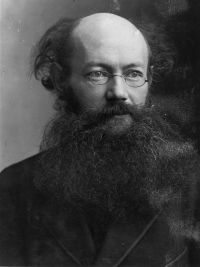
Peter Alexeivitch Kropotkin

Peter Alexeivitch Kropotkin

Summary

Portrait of Peter Alexeivitch Kropotkin Peter Alexeivitch Kropotkin The Terror in Russia (1909)

Every nation is certainly bound to work out her liberty in her own way and with her own forces, however painful the way may be. But one of the greatest achievements of modern civilisation is precisely the feeling of intimate kinship among all nations. It is now impossible that one nation should suffer, as Russia suffers at the present moment, without these sufferings having their effect upon all the family of civilised nations and awakening among them a general feeling of solidarity. Despotism in one part of the world reacts upon all the races of the world.
Source: Wikisource

Portrait of Peter Alexeivitch Kropotkin Peter Alexeivitch Kropotkin The Terror in Russia (1909)

On the same day, however, M. Stolypin, answering interpellations in the Duma, while admitting the guilt of some officials, declared that he was not responsible for the illegalities of the previous Government, and promised to prevent their recurrence during his tenure of office.
"I repeat," he said, "that the most sacred duty of the Government is to protect peace and law, the freedom, not only of labour, but also of life.
Source: Wikisource

Portrait of Peter Alexeivitch Kropotkin Peter Alexeivitch Kropotkin The Terror in Russia (1909)

At the very next sitting of the first Duma the Liberal Deputy Rodicheff, in a speech of passionate eloquence, raised the question again:—
"Everywhere and always during the electoral campaign," he said, "one and the same cry was raised above all others—'Amnesty!' We are witnesses that this is the demand of the whole nation, not only of those who suffer in the prisons or of their friends. Blood is not shed now so often as it was three months ago; but, gentlemen, this last month 99 persons were executed in Russia. ... We, here in the Duma, cannot work; that feeling oppresses us.
Source: Wikisource

Get perspective with Kwize: daily news enlightened by great literature