Summary

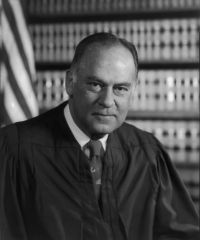
Portrait of Potter Stewart Potter Stewart Shelton v. Tucker, 364 U.S. 479 …

Such interference with personal freedom is conspicuously accented when the teacher serves at the absolute will of those to whom the disclosure must be made—those who any year can terminate the teacher's employment without bringing charges, without notice, without a hearing, without affording an opportunity to explain.
The statute does not provide that the information it requires be kept confidential. Each school board is left free to deal with the information as it wishes.
Source: Wikisource

Portrait of Potter Stewart Potter Stewart Shelton v. Tucker, 364 U.S. 479 …

By limiting the power of the States to interfere with freedom of speech and freedom of inquiry and freedom of association, the Fourteenth Amendment protects all persons, no matter what their calling. But, in view of the nature of the teacher's relation to the effective exercise of the rights which are safeguarded by the Bill of Rights and by the Fourteenth Amendment, inhibition of freedom of thought, and of action upon thought, in the case of teachers brings the safeguards of those amendments vividly into operation.
Source: Wikisource

Portrait of Potter Stewart Potter Stewart Shelton v. Tucker, 364 U.S. 479 …

Even if there were no disclosure to the general public, the pressure upon a teacher to avoid any ties which might displease those who control his professional destiny would be constant and heavy. Public exposure, bringing with it the possibility of public pressures upon school boards to discharge teachers who belong to unpopular or minority [p487] organizations, would simply operate to widen and aggravate the impairment of constitutional liberty.
Source: Wikisource

Get perspective with Kwize: daily news enlightened by great literature